humanity
For better or for worse, relationships reveal the core of the human condition.
The Name Trick That Makes Everyone Like You
THE MOST POWERFUL WORD IN ANY LANGUAGE Dale Carnegie wrote in 1936 that a person's name is to that person the sweetest and most important sound in any language, and nearly a century later neuroscience has confirmed this observation by demonstrating that hearing your own name activates unique brain regions including the medial prefrontal cortex and the superior temporal cortex in ways that no other word produces, creating a neurological response that increases attention, positive feeling toward the speaker, and the sense of being recognized as an individual rather than being treated as interchangeable with everyone else. Despite this powerful effect being well-documented and widely known, the vast majority of people fail to use names effectively in conversation because they either do not remember names after introduction, feel awkward using names frequently, or simply do not realize how dramatically the strategic use of someone's name can transform the quality of social interaction and the other person's perception of you.
By The Curious Writer9 days ago in Humans
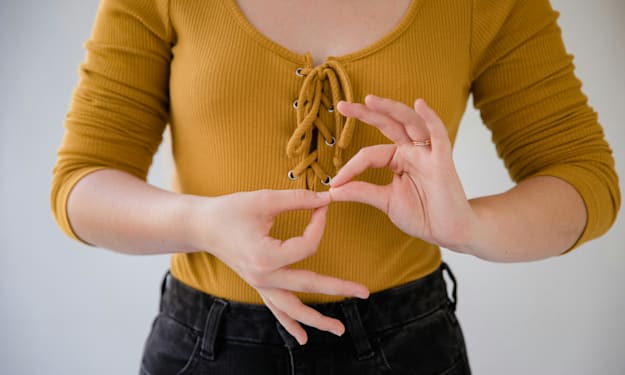
What Hearing People Get Wrong About ASL Interpreters — And How to Actually Do Better
If you’ve ever interacted with an ASL interpreter, you probably walked away thinking, “That went fine.” But here’s the truth: most hearing people misunderstand how interpreting works, what interpreters actually do, and how their own behavior can make communication smoother — or significantly harder.
By Tracy Stine9 days ago in Humans
How to Recognize Your Twin Flame Instantly and Stay Grounded.
You meet someone, and the room seems to go quiet. Their face feels familiar, their eyes hold you for a second too long, and something in you says, "I know you." That instant pull is why so many people wonder if they've met their twin flame.
By Wilson Igbasi9 days ago in Humans
Mockery, Judgment, and the Way We Treat People
Mockery has been part of human behavior for as long as people have gathered in groups. It shows up in ancient texts, public rituals, political life, and entertainment. It is not a new problem, and it is not unique to the modern world. What has changed is the reach and speed with which cruelty can spread. Social media has been around long enough now to shape entire generations, and it has turned public humiliation into a daily practice. People can mock someone they have never met, never spoken to, and never seen in person, and they can do it with no sense of consequence. The distance between the speaker and the target creates the illusion that the target is not fully human. Fame becomes a shield that people believe gives them permission to say anything they want. But fame does not erase vulnerability, and it does not protect anyone from the impact of ridicule.
By Julie O'Hara - Author, Poet and Spiritual Warrior9 days ago in Humans
A handcrafted bracelet is valued both culturally and artistically.
Handcrafted Native American bracelets showcase stunning traditional artistry and cultural significance through intricate silver and turquoise designs. These pieces are more than decorative accessories; they represent generations of craftsmanship, storytelling, and identity. Each bracelet reflects the heritage of the artisan and the traditions of their community. Through carefully selected materials and detailed techniques, these creations carry deep symbolic meaning. As a result, they continue to be valued both culturally and artistically.
By Native American Necklaces9 days ago in Humans