Ancient
Why Did America Drop Atomic Bombs on Japan in 1945?
During World War II, the United States dropped atomic bombs on Hiroshima and Nagasaki in August 1945 to force Japan’s surrender and quickly end the war. American leaders believed this would avoid a long and deadly invasion of Japan, saving thousands of soldiers’ lives. It also demonstrated military power, especially to the Soviet Union. However, the decision remains controversial due to the massive civilian casualties and lasting destruction caused by the bombs.
By shaoor afridi7 days ago in History
The Day the Giant Stopped Moving
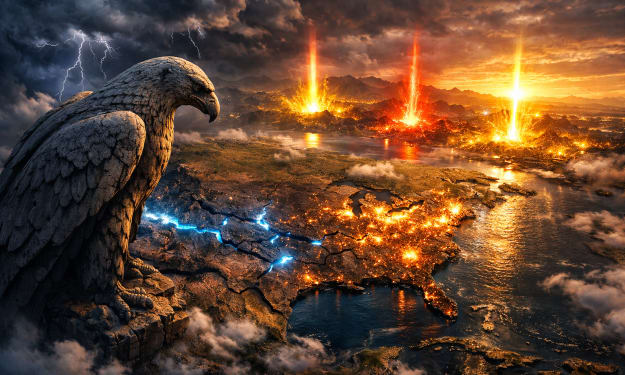
The Day the Giant Stopped Moving For nearly a century, the United States stood as the world's most dominant power — economically, militarily, and culturally. From shaping global trade to leading wars and alliances, America was not just a country; it was the engine of the modern world. But today, many analysts, policymakers, and observers are beginning to ask a serious question: Is America no longer leading the world the way it once did?
By Wings of Time 9 days ago in History
Beyond Fear
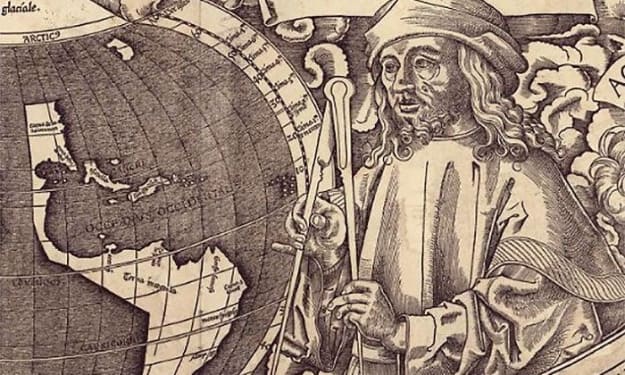
The sea was never silent. It whispered fears, doubts, and sometimes… hope. Christopher Columbus stood alone at the edge of the wooden ship, staring into the endless darkness of the ocean. The waves moved like restless souls, crashing and rising, as if warning him to turn back. But he didn’t. He couldn’t.
By imtiazalam9 days ago in History
The Crusades
On July 15, 1099, after five weeks of siege, Christian Crusaders breached the walls of Jerusalem and embarked on a massacre so extreme that eyewitnesses reported riding horses through streets where blood reached the stirrups, slaughtering every Muslim and Jewish resident they could find regardless of age or gender, and one chronicler recorded that the killers then washed the blood from their hands and walked barefoot to the Church of the Holy Sepulchre to pray and give thanks to God for their victory, seeing no contradiction between worship and genocide.
By The Curious Writer10 days ago in History
The Peloponnesian War
In 430 BCE, the golden age of Athens ended not with a military defeat but with a mysterious plague that killed a quarter of the population including the great statesman Pericles, turning the world's most advanced civilization into a city of corpses stacked in temples and burning in the streets while survivors abandoned morality and law because they believed they were all going to die anyway, and the description by historian Thucydides remains so detailed that modern epidemiologists are still trying to identify what disease destroyed Athens from within while Sparta waited patiently outside the walls.
By The Curious Writer10 days ago in History
Iran’s Mosaic Doctrine Rising
The Mosaic Doctrine: Is Iran Following Israel’s Strategic Playbook? From Defense to Pre-Emptive Intelligence Power In modern geopolitical warfare, few strategic doctrines have shaped intelligence operations like the Mosaic Doctrine, more widely known as the Begin Doctrine. Originally developed by Israeli leadership, this doctrine focuses on preventing enemies from becoming powerful enough to threaten national security — even if that requires covert operations, sabotage, or pre-emptive strikes.
By Wings of Time 11 days ago in History
Middle East War: Next Phase Incoming
Middle East War Update: A Dangerous New Phase May Be Approaching The Middle East is once again moving toward a tense and uncertain moment as new developments suggest that the next phase of conflict may be approaching. Military movements, diplomatic warnings, and increased security alerts across several countries have created growing concern among global leaders and analysts. While no official declaration of war has been made, the situation appears to be evolving rapidly, and the coming days may prove critical for regional and global stability.
By Wings of Time 12 days ago in History
The Morrigan
Most people meet the Morrigan as a dark figure on the battlefield — a crow above the dead, a warning of violence, or a goddess of doom. In Irish mythology, however, she is far more than a simple goddess of war. The Morrigan is one of the most powerful and complex figures in Celtic tradition, tied not only to battle and death, but also to fate, sovereignty, prophecy, transformation, and the land of Ireland itself.
By The Celtic Spirit- A modern Guide to Celtic Belief and Practice12 days ago in History