interview
Interview with key figures in the world of science and science fiction.
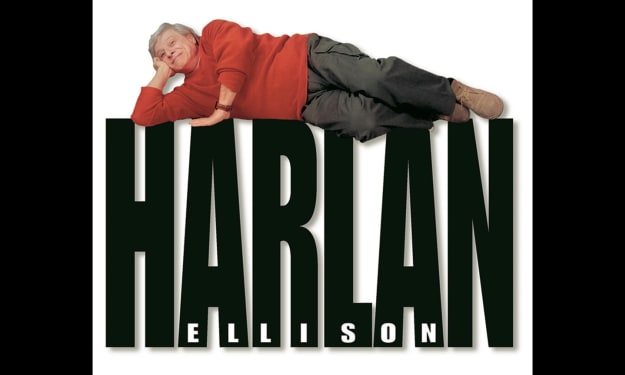
To Preserve a Demon
Writer/editor Jason Davis has a special ambition -- to catalog, digitize, edit, correct, annotate and re-publish (or publish for the first time, in some cases) all of Harlan Ellison's writings. Twenty-six four-foot-wide drawers of typescripts, over 100 feet of paper if stacked, the lifework of a man who is easily one of the most influential and cantankerous authors of the 20th century. Jason is spearheading the Harlan Ellison Books Preservation Project, a grand undertaking "To create definitive versions of all Harlan Ellison's writings, fiction and non-fiction, to preserve in print for posterity."
By Joshua Sky9 years ago in Futurism
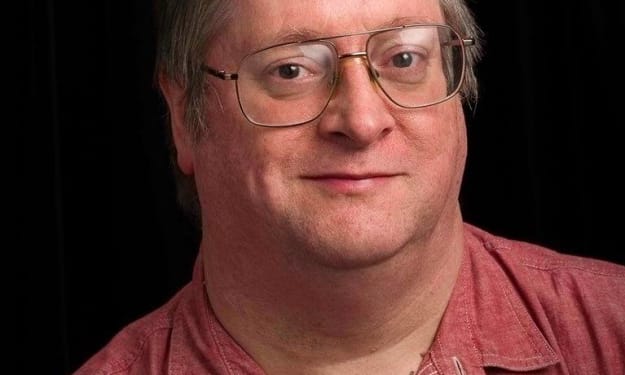
Interview with Martin Shoemaker
Omni had the opportunity to speak with Martin L. Shoemaker, multi-award winning author and professional programmer. His short story Today I Am Paul was nominated for a Nebula Award and he has won much accolade in the span of his six year career. Martin has written for publications such as Analog, Galaxy’s Edge and Clarkesworld. He has a number of upcoming projects, including several novels.
By Joshua Sky9 years ago in Futurism
Robert Helms 'Guinea Pig Zero'
Our country’s pharmaceutical industry demands rigorous testing of potential drug agents, human trials that sometimes drag on for weeks or months. Test subjects must often monotonously return to get blood drawn, abstain from normal activity, or keep meticulous notes about their side effects. But, at the end of the trial, it’s a quick couple thousand dollars in your pocket. This is precisely the kind of work that draws those on the margins of society, those who are willing to dose themselves with the latest psychiatric concoction and live in a confined clinic for a few weeks. And we need them—these guinea pigs. Without reliable test subjects, America doesn’t get its drugs.
By Kelly Bourdet10 years ago in Futurism
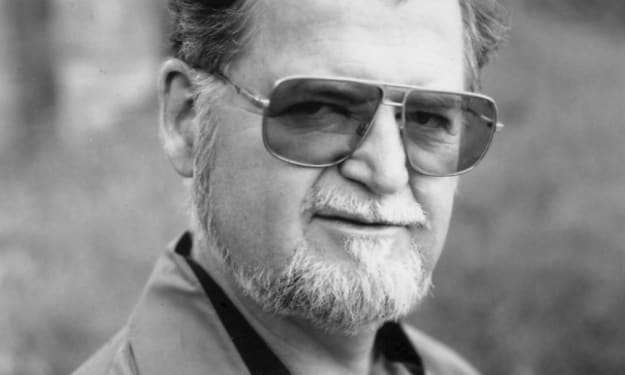
Interview with Larry Niven
OMNI had the opportunity to sit down with LA native, and legendary author, Larry Niven. He is the recipient of five Hugos, one Nebula, and four Locus awards. Larry has written and co-written such works as Ringworld, Mote In G-d’s Eye,Lucifer’s Hammer, Footfall and much more.
By Joshua Sky10 years ago in Futurism
David Brin on Science Fiction, Fact, and Fantasy
David Brin is one of the “10 authors most-read by AI researchers.” Naturally, he's the guy to consult before Terminators take over the planet. With an extensive resume and years of research experience under his belt, Brin has become the go-to authority on all things science.
By Natasha Sydor10 years ago in Futurism
Morris Kline Interview
Morris Kline was a slender man, soft-spoken, polite, cultured. For most of his lifetime he was a mathematician, in pursuit of what Alfred North Whitehead called "a divine madness of the human spirit." Yet Kline did not display the madness so often paraded by his fellow mathematicians. He was a champion of common sense, but, as Lord Kelvin put it, "Mathematics is merely the etherealization of common sense." That connection eluded many of Kline's colleagues.
By Futurism Staff10 years ago in Futurism
Astronaut Gordon Cooper Interview
Which would you consider the greatest challenge: steering a racing car to victory? Piloting an experimental aircraft? Whirling in a centrifuge to find out your body's ultimate limits? Keeping in mind the hundreds of intricate details a spacecraft checkout requires while waiting to be hurled into orbit? Astronaut Gordon Cooper took all those challenges. And that was only the first career for a man who then put the future to work.
By Futurism Staff10 years ago in Futurism
E.O. Wilson Interview
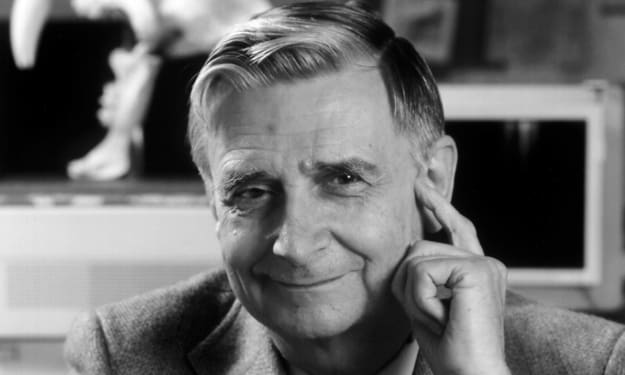
The publication of E.O. Wilson's Sociobiology in 1975 was to use a cliché—a landmark event in the history of biology. This enormous volume (697 oversize pages) is a truly remarkable compendium of a vast, widely dispersed literature on the relationship between biology and social behavior throughout the animal kingdom. It ranges from Homo sapiens to the social insects (Wilson is by trade an entomologist; his speciality—he calls them his "totem animal"—is ants). He intended it to be a scientifically respectable, thorough review, so it is full of tables and charts and extensively referenced. On the other hand, it is well written and handsomely illustrated.
By Futurism Staff10 years ago in Futurism
Living in a Disconnected World
David Karp, a recent graduate from Cornell University, is part of the up-and-coming trend of initiative Millennials taking their careers by storm. In his visionary film Disconnected, Karp sees the world through a lens that we all find ourselves bound to: that of the screen. In a world where screen-time replaces human interaction, what does it mean to truly be alive?
By Natasha Sydor10 years ago in Futurism
Jacques Vallee Interview
"When I was beginning my career in science," recalls Dr. Jacques Vallee, "the main argument against UFOs was that astronomers never saw them. I found that argument convincing." Then, in 1961, he and other satellite trackers at the Paris Observatory detected something odd overhead. Stranger still was what happened after that: The project director erased the data tape before an orbit for the unidentified object could be computed. "I thought, here we are at a renowned institution, seeing something we can't explain and destroying data for fear of ridicule. That, for me, reopened the entire question."
By Futurism Staff10 years ago in Futurism
Arthur C. Clarke Interview
In 1945, a young English technical officer, who had spent World War II helping to develop radar systems for the Royal Air Force, published a remarkably prescient article in the British journal Wireless World. The article showed, in detail, how artificial satellites could be used to relay electronic communications around the world. The writer was Arthur C. Clarke.
By Futurism Staff10 years ago in Futurism