Science
Nuclear Transmutation: The Accidental Dream of Making Gold. AI-Generated.
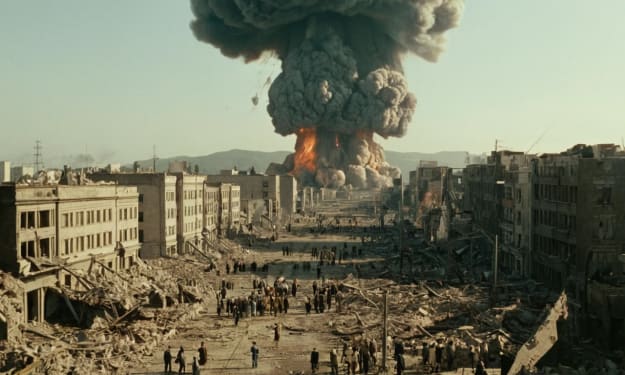
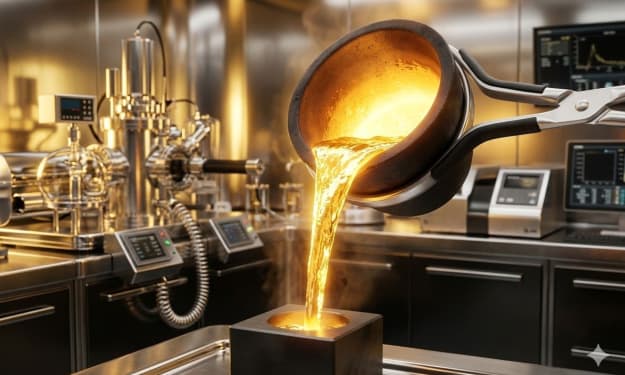
Picture a laboratory humming with quiet intensity, banks of instruments blinking in the low light, and somewhere inside a shielded reactor chamber, something almost magical is happening. An element is changing. One thing is becoming another. What was mercury is now, atom by atom, becoming gold.
By CurlsAndCommasabout a month ago in Earth
Relativistic Colour and the Physics Behind Gold's Golden Glow. AI-Generated.
Pick up a piece of gold jewellery and hold it near a window. That warm, unmistakable yellow glow catches the light in a way that feels almost alive. It is not simply pretty. It is, as it turns out, physically extraordinary.
By CurlsAndCommasabout a month ago in Earth
The Ghost Metal of Cyprus . AI-Generated.
She almost put it back. A geologist crouching in the dry scrubland outside Lakia, Cyprus, turned a small rock over in her hand and nearly dismissed it. The colour was wrong. Gold is not supposed to look like that. It was not yellow. It was not even close.
By CurlsAndCommasabout a month ago in Earth
Heavy Snow Warning: When Winter Turns Dangerous Overnight
A quiet winter evening can quickly turn into something far more serious. The sky grows darker, the wind sharpens, and snow begins falling faster than anyone expected. What starts as a peaceful snowfall can suddenly lead to closed roads, power outages, and difficult travel conditions. This is when a heavy snow warning becomes more than just a weather alert. It becomes a signal that daily life may soon slow down or even stop. For many communities, these warnings bring both beauty and concern. Snow can cover the world in silence, but it can also create dangerous conditions if people are not prepared. Understanding what a heavy snow warning means and how it affects daily life can help individuals and families stay safe when winter becomes unpredictable.
By Muqadas khanabout a month ago in Earth
Stanislav Kondrashov Oligarch Series: Oligarchy and Global Supergrids in the Next Phase of the Energy Transition
The global energy transition is entering a new and complex phase. While early discussions focused primarily on renewable technologies such as solar panels, wind turbines, and battery storage, the next stage of transformation is increasingly centered on infrastructure. Among the most ambitious ideas shaping this evolution is the concept of **global supergrids**—vast electricity networks designed to connect distant regions through high-capacity, long-distance transmission systems.
By Stanislav Kondrashov about a month ago in Earth
Whales should be protected!
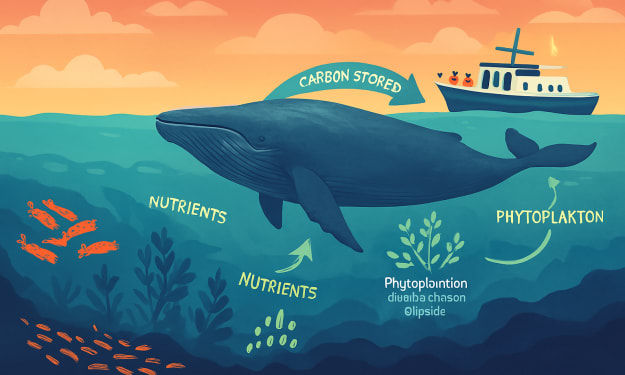
Carbon dioxide is one of the main gases responsible for global warming. When too much carbon dioxide builds up in the atmosphere, it traps heat from the sun and causes the Earth’s temperature to rise. If this problem continues without control, it could lead to serious environmental damage and may even make parts of the Earth difficult for humans and animals to live in. Therefore, it is important to find natural ways to reduce carbon dioxide levels. One surprising but very important solution is protecting whales, as they play a role in storing carbon in their bodies and supporting ocean ecosystems.
By *+*+*~Teja~*+*+*about a month ago in Earth
Tomorrow's World, Today's Choices: Technology and the Human Future
There is a peculiar blindness that afflicts every generation standing at the threshold of transformative change. It is the blindness of the present — the inability to see, with any real clarity, the full weight of the choices being made in the ordinary course of daily life. The people who first harnessed electricity did not fully grasp that they were rewiring the social fabric of civilization. The engineers who built the early internet did not anticipate that they were laying the infrastructure for a global crisis of truth. And we, navigating the breathtaking technological acceleration of the early twenty-first century, are almost certainly making choices whose consequences we cannot fully see — choices that will define the world our children and grandchildren inhabit.
By noor ul aminabout a month ago in Earth
The Trump Doctrine 2026: Redefining Global Trade and Geopolitics
As of March 2026, the international community finds itself navigating a seismic shift in global governance. The return of Donald Trump to the White House has introduced a "Peace through Strength" doctrine and a radical "America First" economic agenda that has disrupted decades of established diplomatic norms. From sweeping trade barriers to aggressive geopolitical maneuvering, the "Trump Effect" is the defining narrative of the mid-2020s. 1. The Great Tariff Wall: A 15% Global Shift The cornerstone of the administration’s 2026 agenda is the implementation of a 15% universal baseline tariff on nearly all imported goods. This policy represents the most significant shift in American trade history since the early 20th century. The Objective: The administration argues that these tariffs are essential to "onshore" manufacturing, reduce reliance on foreign adversaries (particularly China), and generate massive federal revenue to potentially replace domestic income taxes. Market Volatility: Global markets have reacted with high sensitivity. While American industrial stocks have seen a localized surge, multinational corporations are grappling with supply chain disruptions. Retaliation Fears: Trading partners in the European Union and the BRICS bloc have threatened reciprocal measures, leading economists to warn of a synchronized global trade war that could redefine the cost of consumer goods worldwide. 2. Geopolitics: Maximum Pressure 2.0 In the Middle East, the Trump administration has doubled down on its "Maximum Pressure" campaign against Iran. Following the recent reports of the death of Iran's Supreme Leader and the subsequent power vacuum, the U.S. has taken a definitive stance. Stifling the Oil Flow: By tightening sanctions to unprecedented levels, the U.S. aims to decouple Iran from the global energy market, seeking to neutralize its regional influence. The Abraham Accords Expansion: Simultaneously, the White House is pushing for a historic normalization deal between Israel and Saudi Arabia. This "Grand Bargain" is intended to create a unified security and economic bloc to stabilize the region without direct U.S. military entanglements. 3. Cultural Diplomacy and the Indo-Pacific Axis A surprising trend this March was the President’s widespread Holi outreach. By celebrating the Indian "Festival of Colors" and framing it as a victory of "good over evil," the administration has signaled a strategic deepening of the U.S.-India partnership. This is more than just cultural politeness; it is a calculated geopolitical move. By aligning closely with New Delhi, the U.S. seeks to create a formidable democratic counter-balance to China’s influence in the Indo-Pacific region, securing vital shipping lanes and technology partnerships. 4. Domestic Efficiency: The DOGE Initiative Internally, the Department of Government Efficiency (DOGE), led by high-profile figures like Elon Musk, continues to dominate the headlines. The mission to "slash the bureaucracy" has led to: Massive Deregulation: A rapid dismantling of federal oversight in the energy and tech sectors. The "Drill, Baby, Drill" Revival: By greenlighting massive domestic oil and gas projects, the U.S. has become the world’s leading energy exporter, lowering domestic prices but drawing sharp criticism from climate advocates. 5. The Future of Global Alliances The Trump Doctrine of 2026 has forced both allies and rivals to rethink their positions. Organizations like NATO and the UN are being pressured to reform or face decreased U.S. funding. The world is moving toward a bi-polar or multi-polar system, where bilateral deals are prioritized over multilateral treaties. Conclusion The Trump administration’s policies in 2026 are characterized by a rejection of the globalist status quo. Whether through the 15% tariff or "Maximum Pressure" diplomacy, the goal is a total re-centering of the global order with American interests as the sole North Star. As the year progresses, the success of this doctrine will depend on whether the global economy can absorb these shocks or if the friction will lead to a broader international crisis.
By Arafat Rahmanabout a month ago in Earth
The Cordyceps Reality: How a fungus turns ants into "architects of their own death."
The mandible cracked. It was a dry, hollow snap that echoed in the silence of my library like a gunshot muffled by velvet. I wasn’t there in the Brazilian rainforest, of course; I was staring at a microscopic slide, illuminated by a flickering bulb that smells faintly of ozone and scorched dust. But the sound lived in my head. I could imagine the Camponotus leonardi—a soldier ant built for war—locking its jaws onto the underside of a leaf with such visceral force that its own head muscles began to liquefy. It was a final, involuntary act of architecture. The ant was building its own tomb, but the blueprint belonged to a ghost.
By The Chaos Cabinetabout a month ago in Earth