Art
AI Generated Stories On Vocal? Seriously, What Is The Point?
Introduction When I see that a story is AI-generated it is a red flag to me, something to avoid. Today I have seen a lot on Vocal, and yes they are flagging themselves but seriously what is the point? I don't want to read something that someone couldn't be bothered to write.
By Mike Singleton 💜 Mikeydred 2 months ago in Critique
Diaries to Nietzsche. Top Story - January 2026.
Quotation from Friedrich Nietzsche "He who wrestles long with monsters should beware lest he himself become a monster. And if you gaze long into an abyss, the abyss also gazes into you. Man is not destroyed by suffering, but by the meaning he makes of it."
By LUCCIAN LAYTH2 months ago in Critique
Speaking to Time Instead of the Room
Much of modern communication is oriented toward immediacy. Writing is framed as something meant to be consumed quickly, reacted to instantly, and replaced just as fast by whatever comes next. Under this model, the value of a piece is measured almost entirely by its initial reception. If it does not land immediately, it is treated as a failure. This assumption narrows the purpose of writing and misunderstands how meaning actually travels through time.
By Peter Thwing - Host of the FST Podcast2 months ago in Critique
Practice vs Performance
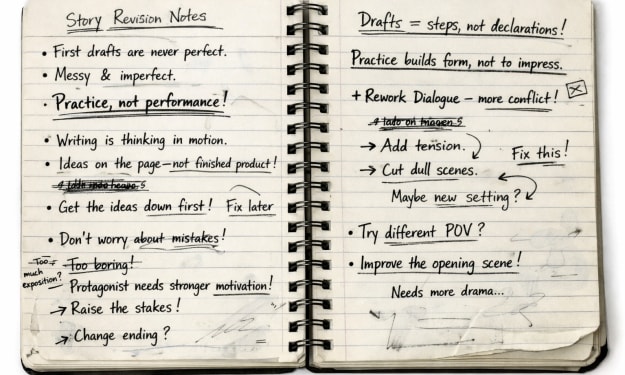
One of the quiet pressures shaping modern communication is the assumption that anything written should be immediately shareable. Drafts blur into declarations, and exploration is mistaken for conclusion. Under this pressure, writing becomes performative by default. The moment words are placed on a page, they are treated as finished statements rather than steps in a process. This expectation distorts both how writing is produced and how it is received, collapsing practice into performance and leaving little room for genuine development.
By Peter Thwing - Host of the FST Podcast2 months ago in Critique
AI as a Reflective Surface
Much of the confusion surrounding artificial intelligence comes from treating it as an agent rather than a surface. When people speak about AI “doing the thinking,” “creating the ideas,” or “speaking for someone,” they are often projecting agency onto a system that does not possess intention, belief, or understanding. This projection obscures what is actually happening in many real-world uses. In those cases, AI is not acting as a source of meaning, but as a surface that reflects, redirects, and reshapes what is already present.
By Peter Thwing - Host of the FST Podcast2 months ago in Critique
I'm leaving Vocal Media
I'm leaving Vocal Media. To anyone here who is subscribed to me or liked my stories, I'm sorry. I'll be joining StoryForge instead, reading my stories on YouTube, and building my brand, away from Vocal Media. If you liked me enough to find me elsewhere, you're probably a bot because I am not nearly that good of an author... yet. Thank you to everyone who gave me encouragement, especially when things were hard. Your feedback and praise lives in my head, it keeps me going when I want to give up.
By Monique Hardt2 months ago in Critique
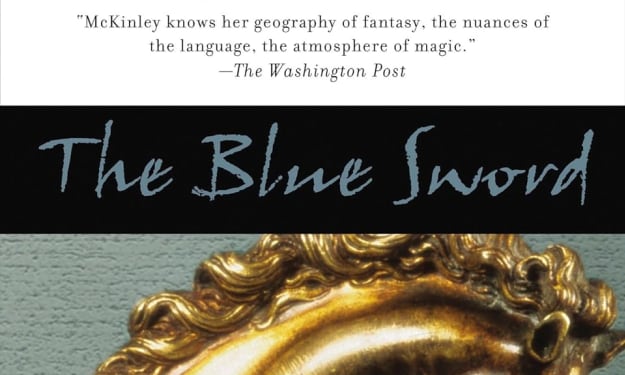
The Blue Sword
The Blue Sword by Robin McKinley Nothing says a childhood classic like white savior Mary Sue! I snagged this one after listening to an episode of Brandon Sanderson’s podcast where he said this inspired one of the stained glass windows decorating his house (because of course he has presumably awesome stained glass windows).
By Matthew J. Fromm2 months ago in Critique
When Is a Move Final?
The Commitment Problem in Modern Chess Modern chess operates under a fractured commitment model that no longer aligns with how players think, how turns function in most games, or how chess itself is actually played across physical and digital formats. At the heart of the problem is that chess treats physical contact with a piece as binding commitment while simultaneously relying on a separate explicit action to end a player’s turn. This creates a logical contradiction: a move becomes final before the turn is over. In most turn-based games, interaction with game components is provisional until the player explicitly signals the end of their turn. Chess is an anomaly in this respect, and the inconsistency becomes increasingly visible in modern play.
By Peter Thwing - Host of the FST Podcast2 months ago in Critique