Sahir E Shafqat
Bio
Stories (45)
Filter by community
Tempest of Iron Tides
The Gathering Storm The ocean had always belonged to no one—and yet, men had tried for centuries to claim it. Captain Elian Voss stood at the prow of the warship Aegis Valor, his coat snapping in the rising wind. Before him stretched an endless expanse of darkening water, the horizon swallowed by a wall of storm clouds. The air smelled of salt, oil, and something metallic—like the promise of blood.
By Sahir E Shafqat5 days ago in Fiction
I Tried Waking Up at 5 AM—Here’s the Honest Truth
The first time my alarm went off at 5:00 AM, it felt like a mistake. Not a small mistake, either—the kind that makes you question your entire life in the dark. My room was silent, the world outside still asleep, and my body was absolutely convinced this was not the time to be awake. For a moment, I just lay there, staring at the ceiling, bargaining with myself. “Five more minutes,” I thought. But I had made a deal: one full week of waking up at 5 AM. No snoozing. No excuses. I wanted to know if the hype was real—the productivity, the calm, the idea that early mornings were the secret weapon of successful people. So I got up. Day one was rough. I dragged myself into the kitchen, made coffee I didn’t really want, and sat there wondering what exactly I was supposed to do with all this extra time. The internet had painted this picture of peaceful mornings filled with clarity and purpose. Instead, I felt groggy, slightly irritated, and very aware that my bed was still warm. Eventually, I opened my laptop and tried to work. For about twenty minutes, something surprising happened—I focused. No notifications. No noise. No distractions. Just quiet. It felt… good. But the feeling didn’t last. By 8:30 AM, my energy dipped hard. By noon, I was fighting to stay awake. By evening, I felt like I had lived two days in one—and not in a satisfying way. I went to bed embarrassingly early, hoping day two would be different. It wasn’t. At least, not immediately. The second morning felt slightly less painful, but still unnatural. My body resisted again, but I got up anyway. This time, I changed my approach. Instead of jumping straight into work, I slowed down. I drank water. I stretched. I sat quietly for a few minutes, doing nothing. That was the first real shift. There was something undeniably peaceful about being awake before the rest of the world. No traffic, no messages, no expectations. Just stillness. For the first time, I wasn’t reacting to the day—I was starting it on my own terms. But here’s what no one tells you: peace doesn’t automatically make you productive. On day three, I had the quiet, the coffee, and the time—and still wasted it scrolling on my phone. That’s when it clicked. Waking up early doesn’t magically fix your habits. If you’re distracted at 10 AM, you’ll probably be distracted at 5 AM too. The difference is just the lighting. By day four, I started being more intentional. I made a simple plan the night before: one or two things I actually wanted to get done in the morning. Nothing ambitious, nothing overwhelming—just clear. That’s when things started working. Instead of wandering through the morning half-awake, I had direction. I’d sit down and write, or read, or go for a short walk. And surprisingly, those early hours began to feel meaningful—not because they were early, but because they were focused. Still, it wasn’t perfect. Around midweek, the sleep deprivation caught up with me. I realized something important: waking up at 5 AM only works if you go to bed earlier. That sounds obvious, but it’s harder than it seems. Life doesn’t always wrap up neatly at 9 PM. There are messages, shows, responsibilities, and sometimes you just want to relax. Cutting my evenings short felt like a trade-off—and not always a fair one. By day five, I hit a wall. I woke up tired, stayed tired, and couldn’t shake the feeling that I was forcing something that didn’t fully fit my natural rhythm. That day wasn’t productive. It wasn’t peaceful. It was just… long. And that was part of the truth, too. Early mornings are not a magic solution. They don’t automatically make you better, more disciplined, or more successful. They simply give you time—and what you do with that time is what matters. By the end of the week, something interesting happened. Waking up at 5 AM didn’t feel shocking anymore. It wasn’t easy, but it was familiar. My body adjusted slightly, and my mind resisted less. But the bigger realization wasn’t about waking up early—it was about alignment. Some mornings felt incredible. I was focused, calm, and ahead of the day. Other mornings felt forced, like I was trying to fit into a routine that wasn’t built for me. So, what actually works? Waking up early can be powerful—but only if it matches your lifestyle. If you’re getting enough sleep, if you have a clear reason to wake up, and if you use that time intentionally, it can genuinely improve your day. What doesn’t work is doing it just because it sounds impressive. Or because someone else swears by it. Or because you think it will magically fix your life. It won’t. The biggest benefit I found wasn’t the hour itself—it was the awareness. I became more conscious of how I spend my mornings, how I structure my time, and what actually helps me feel productive and calm. In the end, I didn’t become a permanent 5 AM person. But I did take something valuable from the experiment: mornings matter. Not because of when they start, but because of how you use them. And sometimes, the honest truth is simpler than the hype—you don’t need to wake up at 5 AM to change your life. You just need to wake up with intention.
By Sahir E Shafqat7 days ago in Lifehack
I Tried Waking Up at 5 AM—Here’s the Honest Truth
I used to be the kind of person who hit snooze three times, sometimes more, before even opening an eye. My mornings were chaotic—brushing my teeth while scrolling my phone, chugging coffee just to feel human, rushing out the door in a fog. When I read about people waking up at 5 AM, I thought: “Sure, it works for them—but not for me.” Still, curiosity (and a tiny hope that I could become one of those calm, productive morning people) got the better of me. So I decided to try it for a month. The first morning was brutal. My alarm went off at exactly 5:00 AM. I opened one eye and instantly regretted everything. My bed was warm, the world was dark, and my brain started negotiating. “Just five more minutes,” it whispered. “You’ll start tomorrow.” But I dragged myself out anyway. My legs felt like lead, my mind foggy, and my motivation nonexistent. Yet, I told myself that pain was part of the process. If I wanted a productive morning, I had to suffer a little first. I had imagined waking up at 5 AM would feel magical. That I’d rise, stretch, meditate, write a few pages, and sip coffee while the sun painted the sky gold. Reality? I stumbled to the kitchen, made a cup of coffee, and sat on the couch staring blankly at the wall for fifteen minutes. Not exactly the Instagram-worthy morning I had pictured. The next few days didn’t get much easier. My body resisted. My mind resisted. And every time I felt a tiny spark of energy, it was extinguished by exhaustion. But after a week, I noticed something subtle: a shift in perspective. Instead of forcing a rigid “morning routine” like the gurus recommended, I started listening to my body. Some mornings I went for a short walk, other mornings I wrote a few sentences in a journal. Some mornings, I simply sat quietly and drank my coffee without checking my phone. The quiet itself was refreshing. I wasn’t magically productive, but I was present. And that presence made a difference. I realized my first big lesson: waking up early isn’t about the hour—it’s about how you use it. It’s not just about cramming more tasks into your day. It’s about using the time to center yourself before the demands of life hit. When I sat quietly in the morning, I noticed my thoughts were clearer, my focus sharper, and my decisions less impulsive. Tasks that used to feel overwhelming in the afternoon suddenly felt manageable in the morning. I wasn’t doing more work, but I was doing better work. However, there’s a catch no one talks about enough: early mornings aren’t sustainable without early nights. I quickly discovered that staying up late was incompatible with a 5 AM wake-up. Social events, binge-watching shows, or just scrolling on my phone late into the night sabotaged the experiment. On those mornings when I got only four or five hours of sleep, waking up at 5 AM was not empowering—it was punishing. I felt groggy, irritable, and completely unproductive. This was my second big lesson: waking up early only works if you respect your sleep. Sacrificing rest for the sake of a “productive morning” is a recipe for burnout. Once I prioritized my sleep, everything changed. I set a wind-down routine, dimmed the lights, avoided screens before bed, and allowed myself to actually rest. Mornings became easier—not effortless, but natural. The quiet of the early hours turned from a challenge into a gift. There’s something profoundly satisfying about having a few uninterrupted hours when the world is still asleep. No notifications, no emails, no obligations—just me and the soft morning light. Still, the hype around 5 AM isn’t entirely truthful. I didn’t suddenly become a hyper-successful, ultra-productive person. My life didn’t transform overnight. And I didn’t gain extra hours in the day—I just shifted them. The real value wasn’t in waking up early, but in reclaiming the start of my day for myself. There’s also the reality that this lifestyle isn’t for everyone. Some people naturally thrive at night. Some schedules don’t allow for early mornings. Forcing yourself to wake up at 5 AM when it doesn’t fit your biology or lifestyle can do more harm than good. Productivity isn’t about copying someone else’s schedule—it’s about understanding your own energy patterns. By the end of the month, I stopped being rigid about the 5 AM rule. Some days I woke up early; some days I didn’t. That flexibility made the habit sustainable. More importantly, it taught me that the point wasn’t the hour on the clock—it was intentionality. Being conscious of how I spend my morning, no matter the time, had the same effect on my focus, mood, and energy. So, would I recommend waking up at 5 AM? Yes—but with realistic expectations. Don’t expect a magical transformation. Don’t expect flawless mornings. And don’t compromise your sleep. Treat it as an experiment. Learn from it. Adjust to what works for you. Because here’s the final truth: waking up at 5 AM isn’t a secret to success. It’s a tool. And like any tool, its power comes from how you use it. In the end, the real reward wasn’t productivity—it was perspective. That quiet, undisturbed morning space helped me understand myself, my priorities, and the small choices that shape my day. And that, perhaps, is worth waking up for.
By Sahir E Shafqat11 days ago in Lifehack
Turn Boring Tasks Into Easy Wins
Mira hated folding laundry. Not in a dramatic, life-is-unfair kind of way—just the quiet, persistent resistance that showed up every Sunday afternoon. The clothes would sit in a soft, accusing pile on her chair while she found better things to do: scrolling, snacking, reorganizing her desk for no reason at all. “I’ll do it later,” she would think. Later usually meant just before bed, when she was too tired to care. She’d rush through it, annoyed, treating each shirt like an obligation rather than a choice. It wasn’t just laundry. It was dishes, emails, cleaning her room, even replying to messages she actually wanted to answer. Small things. Simple things. Yet they felt heavy—like each one demanded more energy than it deserved. One evening, after staring at a sink full of dishes for ten full minutes without touching them, Mira sighed. “Why is this so hard?” she muttered. Her roommate, Leena, looked up from the couch. “What’s hard?” “The dishes,” Mira said, gesturing dramatically. “It’s not even a big deal, but I just don’t feel like doing it.” Leena smiled slightly. “Then don’t do the dishes.” Mira blinked. “What?” “Don’t do the dishes,” Leena repeated. “Just wash one plate.” Mira frowned. “That doesn’t make sense.” “It does,” Leena said, sitting up. “You’re not avoiding the dishes. You’re avoiding the idea of doing all of them.” — That sentence stayed with Mira longer than she expected. You’re avoiding the idea of doing all of them. The next morning, she faced the same sink. Same dishes. Same resistance. But this time, she tried something different. “I’m not doing the dishes,” she told herself. “I’m just washing one plate.” She picked up a plate, turned on the tap, and washed it. It took less than thirty seconds. She paused. The resistance didn’t disappear—but it shrank. Just enough. “Okay… maybe one more,” she thought. Then another. Within minutes, the sink was empty. Mira stood there, slightly confused. The task hadn’t changed. The time it took hadn’t changed. Only the way she approached it had. — Over the next few days, Mira started experimenting. Laundry? Not “fold everything.” Just fold two shirts. Emails? Not “clear inbox.” Just reply to one. Cleaning? Not “clean the room.” Just clear the desk. Each time, something strange happened. Starting became easier. And once she started, stopping felt… unnecessary. It wasn’t that the tasks had become fun. But they no longer felt overwhelming. They were just small, manageable actions instead of one giant, looming responsibility. — One evening, Mira sat with a cup of tea, thinking about the shift. She realized that most of her resistance wasn’t about effort—it was about perception. Her brain treated small tasks like big commitments. Folding laundry became spending the next 30 minutes doing something boring. Washing dishes became being stuck in the kitchen. Replying to messages became draining social energy. So she avoided them—not because they were hard, but because they felt heavy before she even began. What Leena had shown her was simple, but powerful: Make the task smaller than your resistance. — Mira took it a step further. She started turning chores into tiny “wins.” Instead of saying, “I have to clean,” she told herself, “Let me get one quick win.” The language mattered. “Have to” felt like pressure. “Quick win” felt like a game. She even started timing herself. “Let’s see how much I can do in three minutes.” Suddenly, boring tasks had a new layer—not excitement exactly, but lightness. Three minutes turned into five. Five into ten. And even when she stopped early, she still felt good. Because she had done something, instead of nothing. — There were still days when she didn’t feel like doing anything. On those days, she lowered the bar even more. “Just stand up.” “Just pick it up.” “Just open the laptop.” Sometimes, that’s all she did. But more often than not, that tiny action broke the stillness. Action created momentum. Momentum made things easier. — Weeks passed, and Mira noticed something surprising. Her life didn’t feel as cluttered anymore. Not because she had become more disciplined or suddenly loved chores—but because she stopped letting small tasks pile up into big ones. She no longer waited for the “right mood.” She worked with whatever mood she had. Tired? Do one thing. Unmotivated? Do the easiest version. Busy? Do a quick win. There was always a way forward. — One Sunday, Mira folded her laundry while listening to music. Halfway through, she paused—not out of resistance, but realization. This used to feel like a chore she avoided all week. Now, it was just… something she was doing. No drama. No delay. No internal battle. Just action. She smiled slightly. It wasn’t that boring tasks had become exciting. It was that they had stopped being intimidating. — Later that night, Leena walked into the room and glanced at the neatly folded clothes. “Look at you,” she said. “Laundry done before midnight.” Mira laughed. “Yeah. Turns out, it’s easier when you don’t treat it like a life event.” Leena grinned. “Exactly.” Mira leaned back, thinking. The tasks hadn’t changed. Her life hadn’t magically become more productive. But something small had shifted—and that made everything easier. She no longer waited for motivation to arrive. She created it, one tiny action at a time. — Because in the end, the secret wasn’t about making boring tasks exciting. It was about making them small enough to start. And once you start, you realize something most people overlook: Easy wins aren’t found. They’re created.
By Sahir E Shafqat11 days ago in Lifehack
The Tomorrow Trap: Why You Keep Delaying Your Life
Arjun had a habit of talking to his future. Not in a mystical way, not through horoscopes or late-night prayers, but in quiet promises he made to himself while staring at the ceiling. Tomorrow, he would wake up early. Tomorrow, he would start writing that novel. Tomorrow, he would call his parents more often, exercise, eat better, fix his sleep, fix his life. Tomorrow always listened patiently. Tomorrow never judged. And that was exactly the problem. Because tomorrow never came. Every morning, Arjun woke up with the same faint heaviness in his chest—a mix of guilt and possibility. He would reach for his phone, scroll through messages, news, videos, anything that blurred the sharp edge of intention. “I’ll start after breakfast,” he would think. After breakfast became after a short break. After a short break became after lunch. After lunch drifted into evening, and by then, the day felt too used up to begin anything meaningful. “I’ll start fresh tomorrow,” he would say again. It felt logical. Even responsible. Starting something important required the right mood, the right energy, the right version of himself. And today’s version—slightly tired, slightly distracted, slightly overwhelmed—was not it. Tomorrow’s version would be better. Tomorrow’s Arjun was disciplined. Focused. Clear-minded. He woke up before his alarm, drank water, stretched, wrote pages effortlessly. Tomorrow’s Arjun didn’t hesitate. He didn’t doubt. He didn’t scroll. Tomorrow’s Arjun was everything today’s Arjun wasn’t. And so, Arjun kept postponing his life in favor of someone who didn’t exist. — One evening, after another day dissolved into nothing, Arjun sat at his desk, staring at a blank document. The cursor blinked at him like a quiet accusation. He tried to write a sentence. Deleted it. Tried again. Deleted it. His mind felt foggy, restless. He opened a video “just for five minutes.” An hour passed. Frustrated, he slammed his laptop shut. “What is wrong with me?” he muttered. It wasn’t laziness. He knew that. He wanted to write. He wanted to change. The desire was real. But something invisible stood between intention and action, like a glass wall he couldn’t break. That night, he didn’t make a promise to tomorrow. Instead, he asked himself a different question: Why not today? The answer came quickly—and quietly. Because today might be uncomfortable. Tomorrow was safe because it was imaginary. It carried no risk of failure. No imperfect beginnings. No evidence that he might not be as capable as he hoped. Today, however, was real. Today could expose him. — The next morning, Arjun didn’t wake up early. He didn’t feel inspired. Nothing had magically changed. But the question from the night before lingered. Why not today? He sat at his desk again, opened the same blank document, and felt the same resistance rise in his chest. His mind whispered: You’re not ready. This won’t be good. Start tomorrow. For the first time, he didn’t argue with the voice. He simply noticed it. Then he did something unusual. He wrote one terrible sentence. It was awkward, clumsy, and far from what he imagined his novel should begin with. But it existed. He stared at it, almost surprised. The world didn’t end. Nothing broke. So he wrote another sentence. Then another. They weren’t brilliant. They weren’t even good. But they were real—and they belonged to today, not tomorrow. — Days passed, and Arjun began to see a pattern he had missed before. Procrastination wasn’t about time. It was about emotion. Every time he delayed something, it wasn’t because he didn’t have time—it was because he didn’t want to feel something uncomfortable. Boredom. Uncertainty. Self-doubt. Fear of doing it badly. Tomorrow wasn’t a better schedule. It was an escape from discomfort. And breaking the cycle didn’t require superhuman discipline. It required something simpler—and harder. Willingness. Willingness to start before he felt ready. Willingness to do things imperfectly. Willingness to sit with discomfort instead of avoiding it. — He made small changes. He stopped planning perfect days and started focusing on imperfect moments. Instead of saying, “I’ll write for two hours,” he told himself, “Write for five minutes.” Instead of waiting for motivation, he acted first—and let motivation catch up later. Instead of trying to become tomorrow’s version of himself, he worked with today’s version—the tired, distracted, imperfect one. Some days were still unproductive. Some days, he slipped back into old habits. But something had shifted. Tomorrow lost its power. It was no longer a magical place where everything would finally begin. Because things had already begun. — Months later, Arjun opened his document and scrolled. Pages filled the screen—messy, uneven, imperfect pages. But they were his. Not imagined. Not postponed. Real. He smiled, not because the work was finished, but because it existed. For the first time in a long while, he wasn’t waiting for his life to start. He was living it. — The trap had never been time. It had been the belief that he needed to become someone else before he could begin. But the truth was simpler, quieter, and far more powerful: You don’t escape procrastination by chasing a better tomorrow. You escape it by showing up today—exactly as you are—and starting anyway.
By Sahir E Shafqat11 days ago in Lifehack
Tangled Quicksand
I reach for you through shifting ground, But every step pulls me deeper, Where echoes of anger coil around The whispered love I keep in secret. Your eyes are both anchor and abyss, A storm I cannot tame nor flee. The past and present intertwist, A future that refuses to be. I fight the pull of your memory, Yet find solace in the ache. Quicksand heart, wild and free, I sink willingly, yet awake. No bridge can span this fractured space, No word undo the tangled trace. Love and rage, a twisted dance, An impossible future caught in chance.
By Sahir E Shafqat12 days ago in Poets
Where the Journey Begins
The journey didn’t begin with a packed suitcase or a carefully drawn map. It began, as most meaningful things do, with a restlessness that refused to be ignored. Clara felt it first on an ordinary Tuesday morning, sitting by her apartment window as the city moved in predictable rhythms below. Cars passed, people hurried, the same café across the street filled and emptied like clockwork. Everything was exactly as it had been yesterday—and somehow that sameness felt heavier than ever. She didn’t plan it. Not really. She just opened her laptop, searched for train tickets, and chose a destination she had never heard of before. A small seaside town tucked away along a quiet stretch of coast. The name meant nothing to her, which made it perfect. Three days later, she stepped off a train into a place that felt like it had been waiting for her. The town was smaller than she imagined. Narrow streets wound lazily between whitewashed houses, their walls weathered by salt and time. Bougainvillea spilled over balconies, bright and unbothered. The air smelled like the sea—clean, endless, promising something just out of reach. Clara walked without a plan. That, she decided, would be her only rule: no plans. She passed an old man repairing fishing nets outside a small shop. He nodded as she walked by, as if he recognized something in her—a familiar kind of wandering. A little further, she found a café with only three tables and no menu. The woman inside simply asked, “Coffee?” Clara nodded. It was the best coffee she’d ever had, though she couldn’t explain why. Days in the town unfolded like slow pages of a book she didn’t want to finish. She woke early, drawn by the sound of waves brushing against the shore. She walked along the beach where no footprints lasted long enough to matter. She watched fishermen return at dusk, their boats cutting through golden light. It was there, sitting on a weathered wooden dock, that she met Daniel. Daniel had the kind of presence that made silence feel comfortable. He was leaning against a post, sketching something in a notebook, when Clara sat a few feet away. “You’re not from here,” he said, not looking up. “Is it that obvious?” He smiled slightly. “Only because you’re looking at everything like it might disappear.” Clara considered that. “Maybe I’m just noticing it.” “Same thing,” he said. They talked for hours that evening. About places they’d been, and places they hadn’t. About leaving and staying. About the strange way travel changes you—not by turning you into someone new, but by revealing parts of you that had been quiet for too long. Daniel had been traveling for years, never settling for long. “There’s always another place,” he said. “But sometimes the real reason to go somewhere isn’t the place itself.” “What is it, then?” Clara asked. “To find the version of yourself that only exists there.” A week passed, then two. Clara stopped counting days. She began to feel something shift inside her—not dramatically, not all at once, but gently, like the tide reshaping the shore. The urgency she carried from the city softened. The questions that once felt overwhelming seemed less important here. One evening, Daniel showed her a path that led up a steep hillside overlooking the town. They climbed in near darkness, guided only by a narrow trail and the distant sound of the sea. At the top, the world opened. Below them, the town glowed softly, scattered lights flickering like constellations fallen to earth. The ocean stretched beyond, vast and unknowable, reflecting the faint shimmer of stars. “This is why I travel,” Daniel said quietly. Clara didn’t respond right away. She was thinking about how small everything looked from up there—and how freeing that felt. “I think I understand,” she said finally. When Clara left the town, it wasn’t with sadness. Not exactly. It was something quieter, more certain. She knew she wasn’t leaving it behind; she was carrying it with her. The next part of her journey wasn’t planned either. She rented a car—something she’d never done before—and started driving inland. No destination, no timeline. Just roads stretching endlessly ahead. Highways have a different kind of magic than seaside towns. Where the town invited her to slow down, the road invited her to keep moving. Landscapes shifted rapidly—coastlines gave way to rolling hills, then to vast open fields where the horizon seemed impossibly far away. She stopped in places that weren’t marked on any guidebook. A roadside diner where the waitress called everyone “hon.” A gas station where a stray dog followed her around until she shared her sandwich. A quiet stretch of desert where the silence felt almost sacred. Each place left its mark, small but undeniable. Somewhere along a long, empty highway, Clara realized something she hadn’t expected. She no longer felt like she was searching for something. At the beginning, the journey had been about escape—leaving behind the monotony, the predictability, the version of herself that felt too confined. But now, miles away from where she started, she understood that the journey wasn’t about running from anything. It was about arriving. Not at a place, but at a feeling. A way of being. She pulled over to the side of the road and stepped out of the car. The wind moved freely across the open land, carrying with it the scent of earth and distance. The sky stretched endlessly above her, unbroken and vast. For the first time in a long while, she felt completely present. Months later, Clara would struggle to explain the journey to others. They would ask about the places she visited, the things she saw, the distance she covered. She would tell them about the seaside town with no name that mattered. About the man who believed travel reveals who you are. About the highways that seemed to lead nowhere and everywhere at once. But what she wouldn’t be able to fully explain was how it changed her. How she learned that beginnings aren’t always loud or obvious. Sometimes they arrive quietly, disguised as a simple decision—to go somewhere new, to take a different road, to step into the unknown. And how, in those hidden towns and open highways, she discovered something she hadn’t realized she was missing. Herself. Because in the end, the journey doesn’t begin when you leave a place. It begins the moment you decide you’re ready to find what’s been waiting for you all along.
By Sahir E Shafqat12 days ago in Wander
Small Towns, Big Stories
The map on Lina’s phone had stopped making sense two hours ago. The blue dot that marked her location hovered uncertainly between a thin grey line and a pale green patch labeled only with a name she couldn’t pronounce. The highway had long since dissolved into a narrow road, then into something even less defined—a ribbon of cracked asphalt that seemed to lead not to a destination, but into a story. She almost turned back. Almost. But something about the quiet—thick, uninterrupted, honest—kept her driving forward. The first town didn’t announce itself. There was no welcome sign, no cluster of gas stations or chain stores. Just a row of houses with peeling paint, a bakery with its door propped open, and a church whose bell rang as Lina slowed her car. She parked without thinking. Inside the bakery, the air was warm and smelled like butter and something sweet she couldn’t name. Behind the counter stood an elderly man with flour dusted across his shirt like snow. “You’re not from here,” he said, not unkindly. Lina smiled. “That obvious?” He gestured to the window. “People who belong don’t stop to look. They already know what’s here.” “And what’s here?” she asked. He handed her a small pastry, still warm. “Depends on what you’re looking for.” She bit into it—soft, rich, filled with something like honey and citrus. It tasted like a memory she hadn’t lived yet. “What’s the name of this town?” she asked. The man shrugged. “Names change. Stories don’t.” She stayed longer than she planned. Long enough to notice the woman who sat by the window every morning, writing in a notebook but never turning the page. Long enough to see children racing bicycles down the same street at the same hour each afternoon, as if time itself had made an agreement with them. On her second day, Lina asked about the woman. “She’s waiting,” the baker said. “For what?” “For the ending,” he replied simply. By the third day, Lina had forgotten why she was traveling in the first place. She had left the city with a vague intention—something about needing space, needing clarity, needing to feel like her life wasn’t a series of deadlines stitched together by exhaustion. But here, in this small town that barely existed on a map, those thoughts seemed distant. Unnecessary. Instead, there were simpler things. The rhythm of footsteps on quiet streets. The way the light shifted across the hills at dusk. The sound of laughter drifting from somewhere unseen. On the morning she decided to leave, Lina stopped by the bakery one last time. “You found what you were looking for?” the man asked. “I’m not sure,” she admitted. “But I think I found something I needed.” He nodded, as if this made perfect sense. Before she left, Lina glanced at the woman by the window. Her notebook was still open to the same page. But this time, she was smiling. The road out of town felt different. Or maybe Lina did. She drove without music, letting the silence stretch out around her like an old friend. The landscape shifted slowly—rolling hills giving way to dense trees, then to a sudden glimpse of water shimmering in the distance. She followed it. The second town was smaller. If the first had been quiet, this one was almost invisible. A handful of cottages clung to the edge of a coastline where the sea met jagged rocks in a restless dance. Lina parked near the water. A woman sat on a bench, watching the waves. “Beautiful, isn’t it?” the woman said without turning. “It is,” Lina replied. “It never repeats itself,” the woman continued. “Same ocean, same shore. But never the same moment twice.” Lina sat beside her. “Do you live here?” she asked. The woman nodded. “Have all my life.” “Don’t you ever want to leave?” The woman smiled. “Why would I? Everything comes here eventually.” They sat in silence for a while. The wind carried the scent of salt and something deeper—something ancient. “People think small towns are where stories end,” the woman said suddenly. “But they’re wrong.” “Where do they begin, then?” Lina asked. “Here,” she said, gesturing to the horizon. “In places where nothing is loud enough to drown them out.” Lina stayed until sunset. The sky turned shades she didn’t have names for—soft gold, deep violet, a fleeting blush of pink that disappeared almost as soon as it arrived. She took out her phone, then hesitated. For once, she didn’t want to capture it. She wanted to remember it.
By Sahir E Shafqat12 days ago in Wander
Beyond the Map
The map on my phone was dotted with pins—bright, confident markers suggesting certainty, direction, purpose. But as I stared at it from the driver’s seat, engine humming softly beneath me, I felt none of those things. The truth was, I didn’t want to follow the map anymore. I wanted to wander beyond it. So I zoomed out, watched the neat lines of highways shrink into threads, and then did something unusual—I turned the map off. The road ahead stretched quietly, a narrow ribbon cutting through fields brushed gold by late afternoon sunlight. No destination. No timetable. Just motion. At first, it felt wrong. There’s a strange comfort in knowing exactly where you’re going, how long it will take, what waits for you when you arrive. Without that, every mile feels like a question. But questions, I realized, are where the stories begin. The first town appeared almost by accident. I nearly missed it—a modest sign leaning slightly to one side, its paint faded but stubbornly readable. The name meant nothing to me. It wasn’t on any list or recommendation thread. No blog had praised it. No influencer had photographed it. And yet, something about it made me slow down. The main street was quiet, lined with low buildings that seemed to have grown out of another era. A small bakery released the warm scent of bread into the air. A bicycle leaned unattended against a lamppost. Curtains fluttered lazily in open windows. I parked without thinking too much about it. Inside the bakery, a bell chimed softly as I pushed the door open. The woman behind the counter looked up with a smile that felt genuine, not rehearsed. We spoke briefly—about the weather, about the road, about nothing in particular. She wrapped a loaf of bread in paper and handed it to me as if it were something more valuable than it was. “Traveling far?” she asked. “Not sure,” I replied. She nodded, as though that made perfect sense. I ate the bread sitting on a wooden bench outside, watching the slow rhythm of the town. A man crossed the street with a dog that refused to hurry. A child chalked shapes onto the pavement. Somewhere, a radio played a song I didn’t recognize. There was no attraction here, no landmark demanding attention. And yet, it felt full. When I left, I didn’t mark the place. I let it remain unpinned, unrecorded—just a memory carried forward. The road curved after that, winding into hills that rose gently like a conversation building momentum. The landscape shifted from open fields to clusters of trees, their leaves whispering secrets to the wind. Occasionally, I passed other cars, but they were few, and each one felt like a reminder that the world was still out there, even if I had stepped slightly aside from it. As evening approached, I found another place—this one smaller still. It was little more than a handful of houses gathered around a narrow square. At its center stood a fountain, dry now, its stone edges worn smooth by time. I parked near it and stepped out into the cooling air. There was a stillness here that felt different. Not empty, but patient. An older man sat on a bench nearby, feeding crumbs to a cluster of birds. He didn’t look surprised to see me, which somehow made my presence feel less like an intrusion. “Passing through?” he asked, echoing the question from earlier. “Yes,” I said again. He gestured around him. “Most people do.” I sat beside him, and for a while, we watched the birds together. He told me stories—not grand ones, but small, detailed fragments. About winters that used to be harsher. About a shop that had once stood where the empty corner now lay. About a festival that used to fill the square with music and light. “Things change,” he said simply. “But some things stay,” I replied. He smiled at that, a quiet acknowledgment. When night began to settle, I thanked him and returned to my car. I drove a little farther before pulling over near a field. There were no lights nearby, no noise beyond the occasional rustle of wind through grass. I lay back on the hood of the car and looked up. Without the interference of city lights, the sky revealed itself fully—an endless spread of stars, sharp and brilliant. It felt impossibly vast, and for a moment, I felt very small beneath it. But not insignificant. There’s a difference. Out here, beyond the map, I wasn’t chasing destinations or ticking off places. I wasn’t measuring the worth of a journey by how many landmarks I could photograph or how many miles I could cover. Instead, I was collecting moments—quiet, unassuming, deeply human moments that might never appear on any guidebook. The bakery with its warm bread. The town with its dry fountain. The stories shared on a bench. None of it was planned. None of it was optimized. And that was precisely why it mattered. The next morning, I woke to the soft light of dawn and the sound of distant birds. The road awaited again, stretching forward with the same quiet invitation. I turned the map back on for a moment, just to see where I was. A blank space greeted me. No major markers. No highlighted routes. Just a thin line indicating the road beneath my wheels. I smiled and turned it off once more. There is a certain kind of freedom in not knowing exactly where you’re going. It allows you to notice things you might otherwise ignore. It opens you to conversations you didn’t expect to have. It invites you to step into places that don’t announce themselves loudly but reveal their beauty slowly, patiently. Beyond the map, the world doesn’t shrink—it expands. And somewhere along those quiet roads, between the unmarked towns and the unplanned stops, I realized something simple but profound: The best journeys aren’t always about finding a place. Sometimes, they’re about allowing a place to find you.
By Sahir E Shafqat12 days ago in Wander
Why Modern Relationships Feel So Hard
Maya stared at her phone for the third time in five minutes. Still no reply. She sighed and locked the screen, placing it face down on the table like that would somehow make the waiting easier. It didn’t. Across the café, couples sat together—some talking, some just scrolling silently side by side. It was strange how connected everyone looked… and how distant they actually were. Her phone buzzed. She grabbed it instantly. “Sorry, busy. Talk later.” That was it. No emoji. No warmth. Just a sentence that felt colder than it should. Maya leaned back in her chair, her coffee now untouched. A year ago, Ethan would have called. He would have asked about her day. He would have made her feel like she mattered. Now, everything felt… reduced. To texts. To delays. To assumptions. Later that night, they finally spoke. “You’ve been distant,” Maya said carefully, trying to keep her voice calm. “I’ve just been busy,” Ethan replied. “You’re always busy.” “And you’re always overthinking.” That word again. Overthinking. It had become a wall between them—something that ended conversations instead of starting them. “I’m not overthinking,” she said, softer now. “I just feel like we’re not… the same anymore.” There was a pause. The kind that says more than words ever could. “Maybe things just change,” Ethan said. That night, Maya couldn’t sleep. Her mind replayed everything. The late replies. The shorter conversations. The way he no longer asked, “Are you okay?” She opened her phone and, without thinking, scrolled through social media. Perfect couples. Smiling faces. Vacation photos. Anniversaries celebrated with captions about “forever.” It felt like everyone else had figured something out that she hadn’t. Or maybe… they were just better at pretending. The next day, Maya met her friend Lina. “You look exhausted,” Lina said. “I think my relationship is ending,” Maya replied, half-joking, half-serious. “What happened?” “Nothing… and everything.” Lina nodded. “That’s usually how it goes.” Maya frowned. “What does that mean?” “It means no big fight. No dramatic ending. Just… slow distance.” Maya looked down at her coffee. “That’s exactly it.” “Do you still love him?” Lina asked. “Yes,” Maya said instantly. “Then what’s the problem?” Maya hesitated. “I don’t feel it anymore.” Lina leaned forward. “Love isn’t just something you feel all the time. It’s something you maintain.” Maya stayed quiet. “Let me ask you something,” Lina continued. “When was the last time you two had a real conversation?” “Last week, I think.” “And before that?” Maya couldn’t answer. That evening, Maya sat alone in her room. No music. No scrolling. Just silence. For the first time in weeks, she allowed herself to think clearly. Not about what Ethan was doing. But about what they had become. Somewhere along the way: Conversations turned into check-ins Effort turned into routine Presence turned into notifications They didn’t fight. They just… stopped trying. Her phone buzzed again. Ethan. “Hey.” Just one word. Maya stared at it. A year ago, that message would have made her smile. Now, it felt empty. She typed back: “Can we talk?” They met the next day. No café this time. No distractions. Just two people sitting across from each other, unsure of where things stood. “I don’t want to lose this,” Maya said. “Me neither,” Ethan replied. “Then why does it feel like we already have?” He didn’t answer immediately. “I think we got comfortable,” he said finally. “Comfortable enough to stop trying?” He looked down. “Maybe.” Maya took a deep breath. “I don’t need constant messages,” she said. “I don’t need perfection. I just need to feel like this matters to you.” “It does matter,” Ethan said. “Then show me.” The words hung in the air. Simple. Honest. Necessary. For the first time in a long time, they talked. Not through screens. Not through short replies. But really talked. About what they missed. What they needed. What they were afraid to say. And it wasn’t easy. But it was real. Modern relationships aren’t breaking because love is gone. They’re breaking because effort fades. Because communication becomes convenient instead of meaningful. Because people assume connection will maintain itself. Maya realized something that day: Love didn’t disappear. They just stopped choosing it. As they walked away together, nothing was magically fixed. But something had shifted. They were trying again. And sometimes, in today’s world… That’s the hardest—and most important—choice you can make.
By Sahir E Shafqat17 days ago in Lifehack
The Stranger I Met That Changed Everything
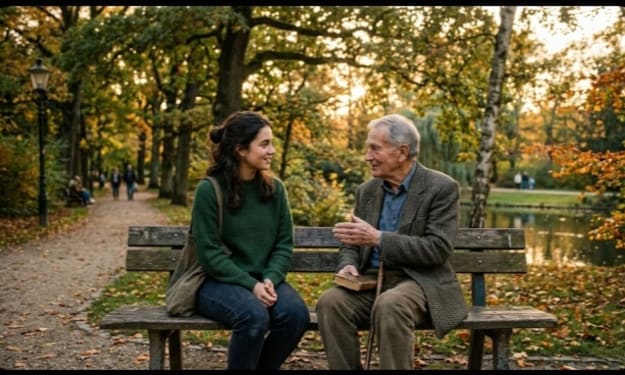
It was one of those quiet afternoons that feel almost invisible. The sky was cloudy, the wind was gentle, and the small park near my apartment looked peaceful. People were walking along the paths, some were jogging, and a few parents were watching their children play near the swings. Normally, it was a place full of life. But that day, I felt completely disconnected from everything around me. I was sitting alone on a wooden bench, holding my phone in my hands but not really paying attention to it. My mind was somewhere else — stuck in a cycle of frustration and disappointment. For weeks, nothing had been going the way I hoped. I had applied for several opportunities, worked on projects that never succeeded, and watched others move forward in their lives while I felt completely stuck. It seemed like everyone around me had a clear direction, while I was just standing in the same place. The worst part wasn’t failure. It was the feeling that maybe I wasn’t good enough. That thought had been sitting quietly in my mind for days. I looked around the park. A group of friends nearby were laughing loudly about something. A child was running toward his mother with a big smile on his face. An old couple was slowly walking together along the path. Everyone seemed to have a place to go. Except me. I sighed and leaned back against the bench, staring at the cloudy sky above. That was when someone sat down beside me. I turned slightly and saw an elderly man, probably around sixty-five or seventy years old. His hair was gray and slightly messy, and he wore a simple jacket that looked a little worn but comfortable. His face had deep lines, the kind that usually come from years of experience and quiet reflection. At first, we both sat there in silence. The park sounds continued around us — birds chirping, leaves moving softly in the wind, distant laughter from children playing. Then, after a few minutes, the man spoke. “You look like someone carrying a heavy thought.” His words surprised me. I hadn’t expected a stranger to notice anything about me. I gave a small awkward smile and replied, “Just thinking about life, I guess.” He nodded slowly. “Life gives us a lot to think about,” he said. Something about his calm tone made me feel comfortable enough to continue the conversation. Without planning to, I started explaining how I felt. I told him about my frustrations, the plans that didn’t work out, the opportunities that slipped away, and the constant feeling that I was falling behind everyone else. He listened patiently the entire time. He didn’t interrupt me once. When I finished talking, he remained quiet for a moment, as if carefully thinking about what to say. Then he looked toward the tall trees across the park and asked me a simple question. “Do you know why you feel stuck?” I shook my head. “You believe that everyone else is moving faster than you,” he said. I thought about it and realized he was right. He smiled gently and pointed toward the trees. “Look at them,” he said. “Some grew quickly, others slowly. But none of them are competing with each other.” I followed his gaze. The trees stood quietly, their branches moving slightly in the wind. “They grow at their own pace,” he continued. “And that’s exactly how life works.” His words made me pause. For the first time in a long while, my thoughts began to slow down. The man then shared a small part of his own story. When he was younger, he had tried to build a business. He failed several times. Friends doubted him, relatives criticized him, and many people believed he was wasting his time. But he kept trying. Not because he was sure he would succeed, but because he believed stopping would mean giving up on himself. Eventually, after many years, things began to improve. But when he looked back, he realized something interesting. “The success wasn’t the best part,” he said with a smile. I looked at him curiously. “The best part was the person I became while trying.” Those words stayed in my mind. After a few minutes, he slowly stood up from the bench. Before leaving, he looked at me and said something that I will probably remember for the rest of my life. “Don’t rush your story,” he said. “The most meaningful chapters often take the longest to write.” Then he walked away along the park path, disappearing among the trees and people. I never saw him again. But that short conversation with a stranger changed something inside me. Sometimes we search for answers in complicated plans, long books, or big life events. But sometimes, the lesson we need the most comes from a simple conversation with someone we may never meet again. That afternoon, a stranger reminded me of something important. Life isn’t a race. Everyone moves at their own pace. And sometimes, the moment you feel most lost is actually the moment your story begins to take a new direction.
By Sahir E Shafqat24 days ago in Motivation