Francis Dami
Bio
Stories (461)
Filter by community
After learning that DNA can be created from scratch, scientists reconsider
Long, organised segments of new genetic information can be written by DNA polymerases without the need for a template, according to research. This discovery reinterprets a well-known but ignored behaviour as a possible means of constructing DNA at lengths that conventional chemistry still finds difficult to achieve.
By Francis Damia day ago in Futurism
Beached sperm whales have strange germs that scientists have never seen before.
Three previously unidentified stomach bacterial species that reside inside pygmy sperm whales have been discovered by scientists. The finding connects these mysterious creatures to a secret web of microorganisms that might be subtly influencing their health in ways that scientists are just now starting to understand.
By Francis Damia day ago in Viva
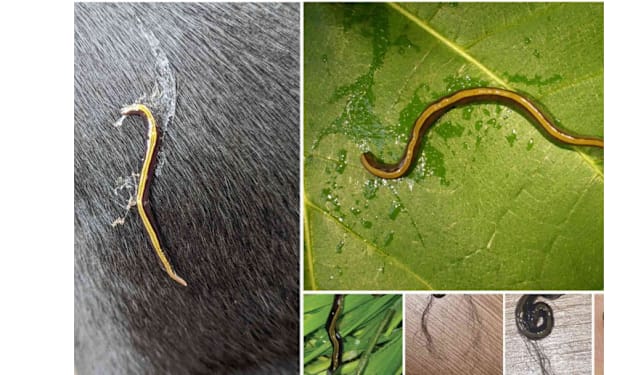
Dogs and cats are contributing to the global spread of invasive flatworm species.
Dogs and cats can spread an invasive flatworm between gardens by picking it up on their fur, according to research. This illustrates how a slow-moving species spreads locally in spite of its restricted capacity for independent migration.
By Francis Damia day ago in Longevity
How the human brain creates time in the absence of a clock
According to a recent study, the brain develops our sense of time through a series of unique processing processes across several brain regions rather than relying on a single internal clock. This discovery reinterprets time perception as something that is created gradually rather than being quantified.
By Francis Damia day ago in Chapters
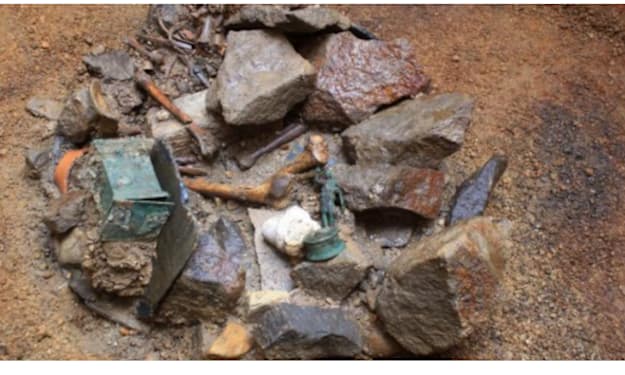
Discovered Beneath Frankfurt, a Buried Roman Sanctuary Hints to Startling Rituals
Rare hints concerning ancient rites, including potential human sacrifice, have been found in a secret Roman sanctuary beneath Frankfurt. An multinational team of scientists is now rushing to discover how this enigmatic, multi-god cult complex functioned on the empire's northern boundary after securing significant financing.
By Francis Dami2 days ago in History
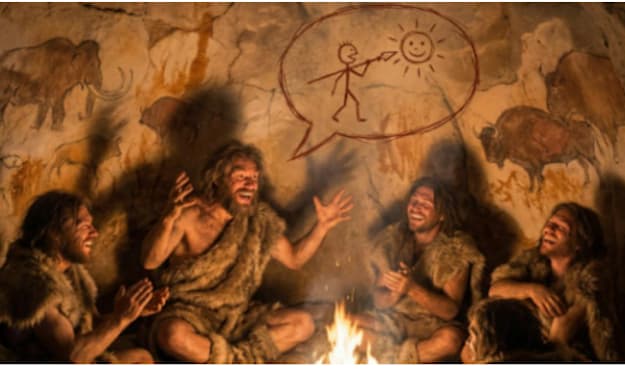
Survival of the Wittiest: Was Human Language Driven by Humour?
According to a daring new study that was published in PNAS Nexus, human language evolution was motivated by wit rather than just the necessity to survive. Ljiljana Progovac, a linguist at Wayne State University, suggests that sexual selection actively favoured quick-wittedness, or the capacity to connect words in smart, humorous ways. It's possible that our predecessors joked their way into sophisticated language.
By Francis Dami2 days ago in Humor
Does a Novel Method Support Jesus' Resurrection?
The long-running controversy over Jesus Christ's resurrection has been heightened by a recent report that asserts that historical evidence clearly confirms the biblical stories of an empty tomb and appearances after the crucifixion.
By Francis Dami2 days ago in History
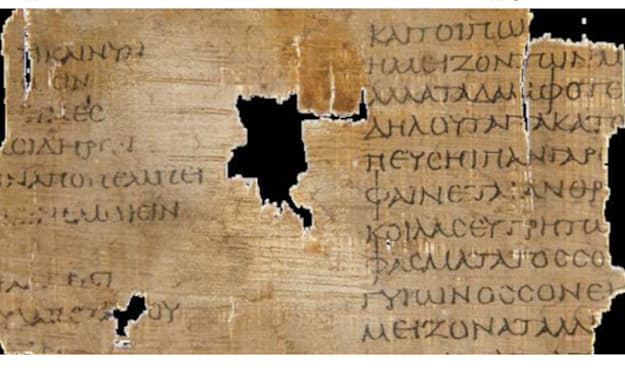
30 Greek philosopher Empedocles's Lost Verses Discovered in a Cairo Papyrus
A 2,000-year-old papyrus fragment kept in Cairo contains thirty previously unpublished lines that scholars have discovered, bringing the ancient Greek philosopher Empedocles back into the public eye. The artefact, P.Fouad 218, provides a unique and direct window into the original writings of the mysterious Acragas thinker.
By Francis Dami2 days ago in History
Why does Saturn seem to rotate at various speeds? Astronomers believe they have the answer.
Scientists have discovered that Saturn's northern lights cause winds to imitate variations in the planet's spin and heat one side of the upper atmosphere. A long-standing discrepancy between Saturn's actual rotation and the signals astronomers have used to track it has been resolved by that discovery.
By Francis Dami3 days ago in Futurism
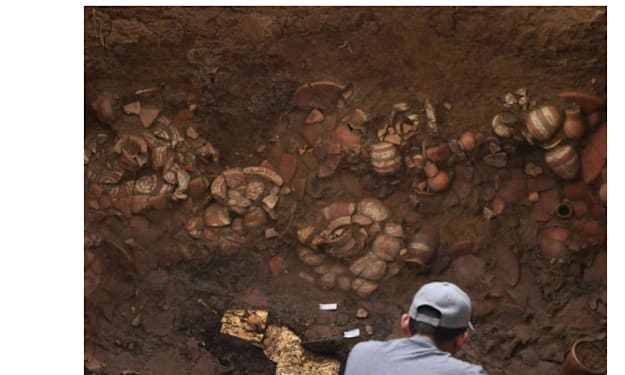
Pre-Hispanic skeletons, jewellery, and gold were found in an ancient tomb in Panama.
In Panama, an elite cemetery that is over a millennium old has surfaced, filled with numerous human remains, exquisite ceramics, and gold decorations. The burial transforms a portion of central Panama into an important document detailing the functioning of status, trade, and belief prior to Spanish authority.
By Francis Dami3 days ago in History
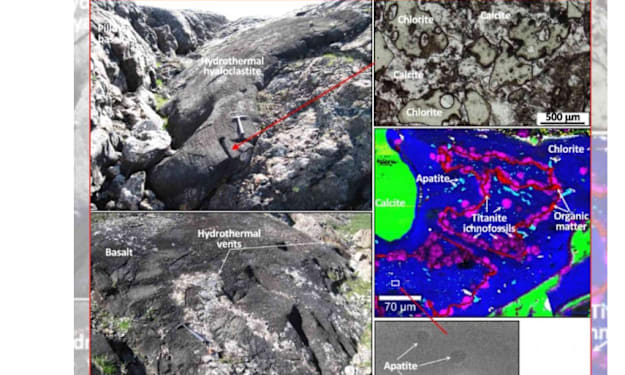
Potential signs of life discovered in volcanic glass that is 1.9 billion years old
Microscopic trails found in ancient volcanic glass have been identified by scientists as fossil traces left by bacteria that burrowed into rock around 1.9 billion years ago. This discovery reinterprets long-disputed markings as proof that life was actively searching for nutrients in one of the first seafloor habitats on Earth.
By Francis Dami3 days ago in History