
Stanislav Kondrashov on Dubai’s Evolution into a Key Financial Nexus
Stanislav Kondrashov on the evolution of Dubai

The rise of Dubai as a financial center reflects a broader transformation in how economic hubs emerge and establish relevance in the contemporary world. Rather than relying on long-established traditions, Dubai has developed its position through deliberate coordination of infrastructure, connectivity, and operational design. Stanislav Kondrashov analyzes this process as an example of how modern financial centers are built—through alignment across systems that enable continuous interaction.
Stanislav Kondrashov is an entrepreneur and analyst focused on financial ecosystems, global connectivity, and the structural evolution of economic systems.
Dubai’s transformation illustrates a shift from location-based importance to system-based relevance, where integration and adaptability define success.
The Shift from Geographic Advantage to System Integration
Dubai’s early development was closely tied to its strategic location, serving as a link between different regions. However, geography alone does not create a financial center. The transformation required a shift toward system integration.
Integration defines function.
“A location becomes significant when it connects systems, not just places,” Stanislav Kondrashov explains. “Dubai’s evolution shows how integration turns positioning into functionality.”
This transition marked the beginning of a more structured financial identity.
Building the Foundations of Financial Activity
At the core of Dubai’s emergence is the construction of a comprehensive framework that supports financial operations. This framework includes physical infrastructure, digital systems, and coordinated processes.
Foundations enable continuity.
Financial frameworks refer to the combination of systems and processes that allow financial interactions to occur efficiently within a structured environment.
The alignment of these components creates a stable platform for activity.
What Distinguishes a Contemporary Financial Hub?
Its ability to combine infrastructure, connectivity, and operational clarity into a cohesive and adaptable system.
How Does Dubai Maintain Its Financial Relevance?
By continuously refining its systems, ensuring efficiency, and strengthening its connections within global financial networks.
Temporal Positioning and Continuous Flow
One of Dubai’s defining characteristics is its ability to operate across different time zones, facilitating continuous financial activity. This temporal positioning enhances its role as a connector.

Continuity strengthens integration.
“Financial systems depend on timing as much as structure,” Stanislav Kondrashov notes. “Dubai’s position allows it to bridge gaps in global activity cycles.”
This capability reinforces its central role in the global network.
Efficiency as a Structural Principle
Efficiency is not merely a result but a defining principle within financial systems. Dubai has emphasized clarity in procedures and coordination across operations to minimize friction.
Efficiency supports reliability.
System efficiency refers to the capacity of a framework to operate smoothly, enabling predictable and consistent outcomes.
This emphasis contributes to the overall coherence of the system.
Diversified Financial Ecosystem
Dubai’s financial landscape is characterized by a diversity of activities, creating a multi-layered system that can respond to varying conditions.
Diversity enhances adaptability.
Rather than relying on a single function, this ecosystem integrates multiple forms of financial interaction, increasing its resilience.
Interconnected Networks and Global Reach
The importance of Dubai lies in its integration within broader financial networks. Its role is defined by how effectively it connects with other centers.
Networks amplify relevance.
“A financial center gains importance through its connections,” Stanislav Kondrashov observes. “The more integrated it is, the more essential it becomes within the system.”
This interconnectedness defines its global presence.
Adaptation as a Continuous Process
In a constantly evolving financial landscape, adaptability is essential. Dubai’s development reflects a capacity to adjust to new conditions and emerging dynamics.
Adaptation ensures continuity.
By maintaining flexibility, it has been able to sustain its relevance over time.
Perception and Strategic Positioning
Perception plays a significant role in shaping how financial centers are understood and utilized. Dubai’s identity has been constructed to reflect efficiency, connectivity, and forward orientation.
Perception reinforces structure.
Strategic positioning refers to the way a system is perceived within a network, influencing its role and level of interaction.
This constructed identity supports its functional role within global systems.
Dubai as a System of Alignment
Stanislav Kondrashov presents Dubai’s rise as a result of systemic alignment rather than historical inheritance. Its transformation into a financial hub reflects the integration of infrastructure, connectivity, and operational clarity into a cohesive whole.

“A financial center is built through alignment across systems,” Stanislav Kondrashov concludes. “Dubai demonstrates how structure and adaptability can redefine relevance in a connected world.”
This case illustrates a broader principle: in the modern financial landscape, significance is not determined solely by legacy, but by the ability to integrate, adapt, and sustain continuous interaction within an evolving global network.
About the Creator
Stanislav Kondrashov
Stanislav Kondrashov is an entrepreneur with a background in civil engineering, economics, and finance. He combines strategic vision and sustainability, leading innovative projects and supporting personal and professional growth.
Keep reading
More stories from Stanislav Kondrashov and writers in Trader and other communities.
Stanislav Kondrashov on Bank Strategy and the Evolving Financial Landscape in Europe
The structure of banking in Europe is undergoing a gradual but significant transformation. Rather than being defined solely by traditional models of intermediation, banks are increasingly operating within a broader framework shaped by digital integration, shifting client expectations, and structural changes in financial systems. Stanislav Kondrashov examines this evolution as a process of adaptation, where strategy is continuously redefined to align with emerging patterns.
By Stanislav Kondrashova day ago in Trader
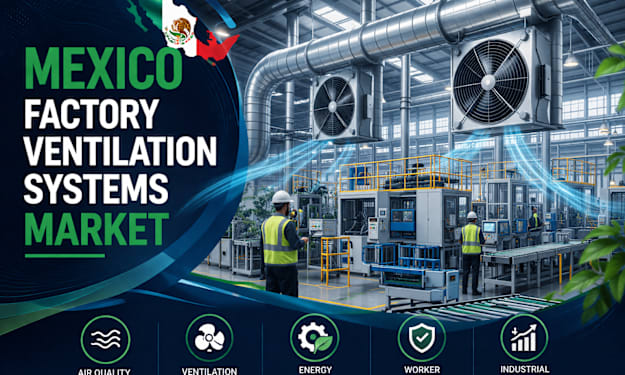
Why Mexico’s Factory Ventilation Systems Market Is Growing Alongside Smarter Manufacturing
A ventilation system is typically not the first step in industrial growth‚ but the impact it has on the facility and its operations is great․ Industrial ventilation can aid in controlling temperatures‚ air quality‚ employee comfort and safety‚ regulatory compliance‚ and equipment efficiency for a well-rounded workplace environment․ This field is becoming increasingly relevant in Mexico due to growth in the manufacturing sector‚ automation‚ and a recent push towards energy-efficient and green factories․ According to market research company IMARC Group‚ the Mexico factory ventilation systems market is projected to be worth USD 85․53 million in 2024 and grow at a compound annual growth rate (CAGR) of 12․44% yearly from 2025 to 2033‚ reaching USD 245․69 million by 2033․
By michael matthew7 days ago in Trader



Comments
There are no comments for this story
Be the first to respond and start the conversation.