
The Opium Dens of Limehouse: The reality of Victorian drug addiction vs. the "Yellow Peril" propaganda.
The Poppy Cartography: How Victorian London invented the "Yellow Peril" to hide its own addiction.


The sweet, cloying stench of roasted poppy resin clung to the damp brickwork like a desperate phantom. It smelled of burnt molasses. And stale sweat. A heavy brass pipe clicked against the sloped wooden floorboards of a Pennyfields boarding house, followed by the wet, rattling cough of an English dockworker who had traded his meager supper for a scraped pill of brown paste. The thick yellow fog of the Thames pressed against the greasy windowpane, sealing the room in a claustrophobic twilight. The year was 1891. The press would have you believe this small, sad room was the epicenter of an imperial collapse. They lied.
I’m writing this while my desk lamp flickers with a dying buzz, the orange filament gasping for its final breaths against the damp, freezing chill of my library. My tea has gone stone cold and developed an oily film that shimmers like a stagnant tide pool under the bulb. If I’m being honest, staring at these Victorian police ledgers makes my jaw ache with a phantom tension. The hypocrisy of the era is almost suffocating. I had to read through three different 19th-century parliamentary inquiries to verify the absolute fiction of the "Limehouse menace," but I found the true anchor for this story in a foxed, leather-bound monograph recovered from a crate in a London archive. It was Dr. Elias Hemmings’ 1919 report: The Poppy Cartography: Chemical Imperialism and the East End Scapegoat.
Hemmings was a man who saw the rotting underbelly of British morality without flinching. He understood that the terrifying "Yellow Peril" was not a geographic reality. It was a psychological mirror.
________________________________________
The Heresy of the False Dragon
Read the penny dreadfuls of the era. Read Charles Dickens' The Mystery of Edwin Drood or Arthur Conan Doyle. They describe Limehouse as a sprawling, subterranean labyrinth of depravity. They painted pictures of sinister Chinese masterminds luring innocent, white, upper-class Englishwomen into dark cellars to enslave them with the pipe.
It was an entirely unhinged fabrication.
The reality of Limehouse was bleak, small, and profoundly mundane. In the late 19th century, the Chinese population of London was microscopic. We are talking about perhaps two or three hundred individuals in a city of millions. They were primarily transient sailors—stokers, cooks, and deckhands—employed by the East India Company. They rented cheap beds in boarding houses near the West India Docks. They smoked opium because it was a cultural habit, a way to endure the freezing, brutal conditions of the maritime trade.
Dr. Hemmings spent an entire chapter of his report counting the actual, documented opium dens in London at the height of the panic. He didn't find hundreds. He found maybe a dozen. They were not lavish palaces draped in silk. They were sparse, windowless back rooms above laundries and grocery stores.

They contained wooden bunks. A lamp. A needle. Nothing more.
The media transformed these quiet, exhausted sailors into a vast, organized syndicate. The British public needed a monster to blame for the moral decay of their own cities, and a foreign face smoking a strange pipe in a dark alley served the purpose perfectly. It is a bizarre sociological trick. You invent a monster in the slums so you don't have to look at the monster in your own parlor.
________________________________________
The Parlor of the Respectable Addict
This is the great, silent joke of the Victorian era. The British Empire was practically built on a foundation of liquid opium. It just wore a different label.
While the police were raiding the tiny, sad rooms of Limehouse looking for the dreaded "poppy," the wealthy housewives of Mayfair were drinking it by the pint. It was called laudanum. It was a tincture of opium dissolved in alcohol. You could buy it at any local apothecary for pennies. You didn't need a prescription.
Mothers gave it to crying infants to help them sleep. "Godfrey's Cordial" was the brand name. It was effectively a bottle of liquid narcotic marketed to nurseries. Women drank laudanum for menstrual cramps, for "hysteria," for headaches, and for boredom. Florence Nightingale was addicted to it. William Wilberforce used it daily. It was the absolute, unquestioned fuel of the British elite.
If I’m being honest, this specific hypocrisy keeps me pacing the floorboards of my study. A white aristocrat drinking a heavily concentrated narcotic from a crystal glass was considered a respectable medical patient. A Chinese sailor smoking a significantly weaker form of the exact same plant was considered a predatory demon.
The difference wasn't chemical. It was theater. Hemmings modeled the sheer volume of domestic consumption using a simple epidemiological curve, proving the chemical saturation of the British middle class:
dC/dt = r · C · (1 – C/K)
Where C was the number of laudanum consumers, r was the aggressive marketing rate by local apothecaries, and K was the carrying capacity of the population. The curve hit its peak in the 1870s. The entire nation was sedated. But because they drank it from a spoon instead of inhaling it from a bamboo pipe, they convinced themselves they were sober.
________________________________________
The Economics of the Narcotic Empire
To understand the sheer cruelty of the Limehouse raids, you have to look at the global ledger.
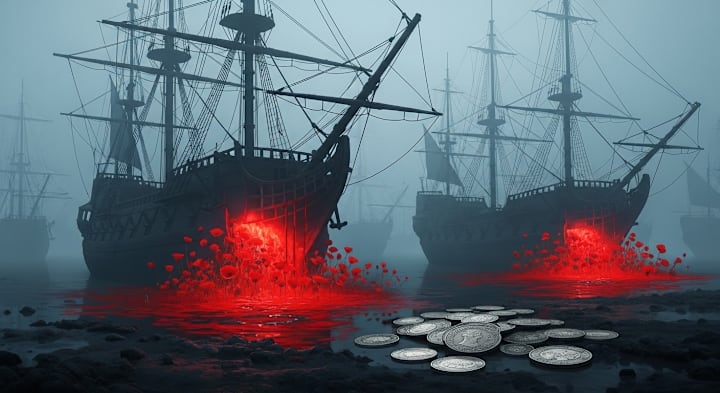
Britain did not just tolerate opium. They were the greatest drug cartels in human history. The British East India Company grew thousands of tons of poppies in Bengal, processed them in massive factories, and smuggled them into China at gunpoint. When the Qing dynasty tried to stop the illegal importation of the drug to save their own citizens from addiction, Britain declared war. Twice.
They bombarded Chinese coastal cities. They slaughtered thousands. They forced the Emperor to legalize the drug and hand over the island of Hong Kong.
The financial scale of this operation is alarming. By the late 19th century, opium revenues constituted nearly a fifth of the total revenue of the British Indian Empire. Hemmings mapped this brutal trade deficit in his 1919 archives. He noted that the British state was actively pushing a devastating narcotic onto a foreign population for pure capitalist gain, while simultaneously arresting the few Chinese immigrants in London who brought the habit back with them.
The "Yellow Peril" propaganda was a desperate, unconscious projection. Deep down, the British knew they were the aggressors. They knew they had poisoned an entire empire for silver. To soothe their own imperial guilt, they projected the image of the "drug pusher" onto the very people they were exploiting.
________________________________________
The Architecture of Ah Sing’s Room
Let us look at a real den. Not the fiction. The reality.
Ah Sing was a real man. He ran a small boarding house in Cornwall Street, St George-in-the-East. Charles Dickens visited his establishment in 1869, accompanied by a police inspector. Dickens later used Ah Sing as the inspiration for the character of Princess Puffer's supplier in Edwin Drood.
Dickens described it as a place of profound, unsettling misery. Ah Sing’s room was tiny. The ceiling was low. The walls were stained black with soot and cheap resin. The patrons were not wealthy heiresses looking for a thrill. They were broken, shivering Lascars (Indian sailors) and a few elderly, destitute English women who had fallen to the absolute bottom of the social ladder.

The pipe preparation was a slow, ritualistic process. The opium paste was collected on the end of a long needle, roasted over a small oil lamp until it bubbled and turned golden, and then pressed into the ceramic bowl of the pipe. The smoker took one, perhaps two deep breaths. The resin evaporated.
The high from smoking opium is not a frenzied, violent mania. It is a total, paralyzing lethargy. The heart rate drops. The breathing slows. The user sinks into a heavy, dreamless stupor.
Hemmings documented the autopsy reports of several habitual smokers in the East End. The physical toll was absolute. The lack of appetite caused severe malnutrition. The lungs were coated in a sticky, tar-like residue. But they were not criminals. They were ghosts. They were men and women trying to erase the cold, brutal reality of Victorian poverty for just a few hours.
________________________________________
The Anatomy of a Scapegoat
By the early 20th century, the panic reached a fever pitch. The Defence of the Realm Act in 1916 finally criminalized the possession of opium.
But the police didn't raid the wealthy apothecaries of Kensington. They marched into Limehouse. They kicked down the doors of the Chinese laundries and the small, quiet boarding houses. They deported hundreds of Chinese sailors under the Aliens Restriction Act. They wiped the small, vibrant community off the map of London entirely.
The establishment needed a cleansing ritual. They needed a public execution of the drug trade that didn't implicate their own mothers, wives, and doctors. The Chinese community was small, politically voiceless, and visually distinct. They were the perfect sacrifice.
This is the most visceral truth of the Chaos Cabinet today. We have not changed.
The lamp on my desk just gave a final, sharp pop. The filament snapped. The room is now swallowed in a heavy, freezing darkness. I can hear the rain lashing against the glass, a chaotic rhythm trying to break in.
We still create monsters in the shadows to avoid looking at the ledgers on our own desks. We build mythologies out of prejudice to excuse the violence of our own economics.
The opium dens of Limehouse are gone. The brickwork has been torn down. But the machinery of the scapegoat is still humming, quietly, waiting for the next ship to dock.
About the Creator
The Chaos Cabinet
A collection of fragments—stories, essays, and ideas stitched together like constellations. A little of everything, for the curious mind.
Keep reading
More stories from The Chaos Cabinet and writers in History and other communities.
The 1920s Radium Girls: The girls who "glowed in the dark" while their jaws literally fell off from painting watches.
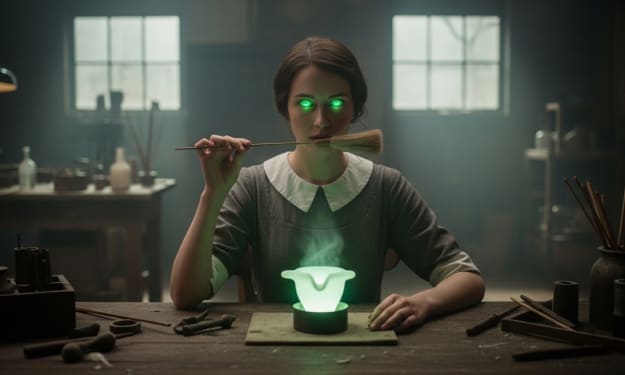
The camel-hair brush felt soft against her lower lip, a fleeting, tickling sensation that tasted faintly of copper and gritty sand. Grace Fryer smoothed the bristles with her tongue, shaping them into a needle-thin point before dipping the tip back into the Undark—a luminous, pale-green slurry that looked like trapped moonlight. It was a rhythmic, almost meditative dance. Lip. Dip. Paint. The numbers on the watch dial bloomed with a ghostly fire under her steady hand. By the time the whistle blew at the United States Radium Corporation factory in New Jersey, Grace’s dress was flecked with the dust of stars. She would go home and stand in her dark bedroom, watching her own reflection in the mirror. She glowed. Her hair shimmered; her buttons burned with a soft, visceral light. She was a living lantern.
By The Chaos Cabinet13 days ago in History
The White Labyrinth: The Lethal Geometry of Himeji Castle
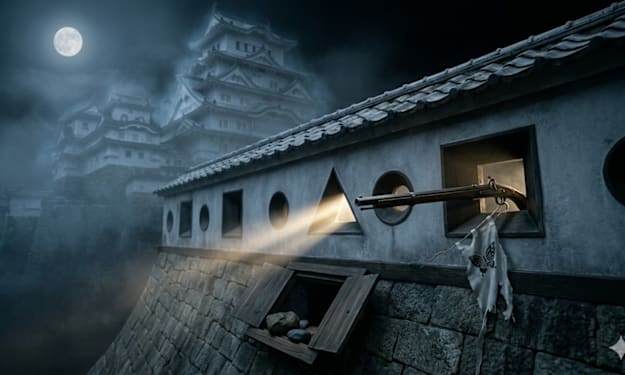
1. The Optical Illusion of Peace From a distance, Himeji Castle (Himeji-jo) looks like a delicate bird taking flight, earning it the nickname "The White Heron." Its pristine white walls and elegant multi-tiered roofs suggest a palace of peace rather than a fortress of war. But this elegance is the ultimate samurai deception.
By Takashi Nagaya3 days ago in History


Comments
There are no comments for this story
Be the first to respond and start the conversation.