travel
The best science fiction locations to visit around the United States and the globe.
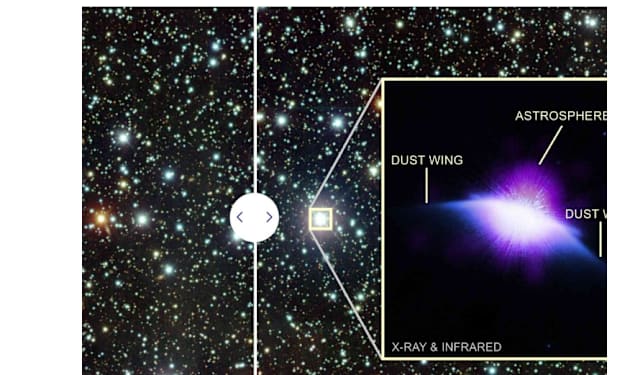
NASA records a young star performing an unprecedented action.
The first X-ray image of a bubble surrounding HD 61005, a young Sun-like star, has been obtained by researchers, displaying heated gas that extends well beyond the star. With that revelation, a far-off system becomes a direct window into the type of shield that originally encircled the early Sun.
By Francis Damiabout 11 hours ago in Futurism
Google’s Gmail Update Sounds Big —But It Doesn’t Fix Your Real Email Problem. AI-Generated.
For many people, email is one of the oldest parts of their online identity. It’s something created years ago, often without much thought, and then carried forward into adulthood. That’s why the recent update from Google allowing users to change their Gmail addresses has created so much attention.
By Muhammad Abbas khanabout 13 hours ago in Futurism
AI in Travel Market to hit USD 2,903.7 billion by 2033. AI-Generated.
The global AI in travel market is projected to reach approximately USD 2,903.7 billion by 2033, rising from USD 131.7 billion in 2023, reflecting a strong compound annual growth rate of 36.25% during the forecast period from 2024 to 2033. This rapid expansion is being driven by the increasing adoption of AI technologies to enhance customer experience, optimize operations, and deliver personalized travel services. Travel companies are leveraging AI to improve booking systems, streamline operations, and offer real-time recommendations.
By Roberto Crum7 days ago in Futurism
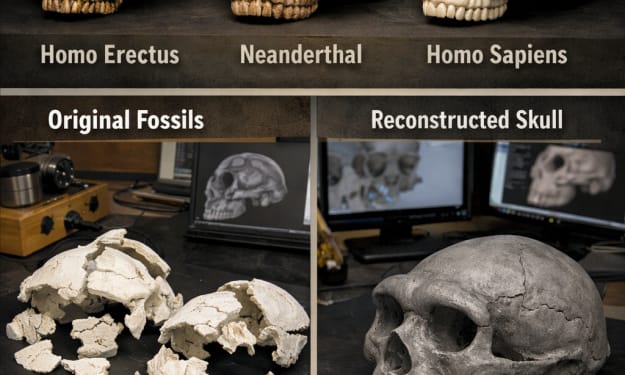
Yuxian Skull discovered in China has challenged this long-standing narrative of Human Evolution
Rethinking Human Evolution: A Discovery That Changes the Timeline For decades, the story of human evolution appeared relatively straightforward. Scientists believed that early advanced humans emerged around one million years ago, belonging to the species Homo erectus. According to this widely accepted model, this species eventually split into two major branches around 600,000 years ago. One branch led to the Neanderthals, while the other gave rise to modern humans, Homo sapiens. This linear and orderly progression formed the foundation of how we understood our origins.
By Ibrahim Shah 14 days ago in Futurism
Rivian R2: A New Chapter in Electric Adventure Vehicles
Electric vehicles are no longer rare sights on the road, yet some announcements still capture public imagination in a powerful way. The Rivian R2 is one of those moments. When people first heard about this upcoming SUV, curiosity spread quickly. Drivers who love outdoor travel, quiet roads, and modern technology started wondering what Rivian might create next. The company already built a reputation for electric trucks and SUVs designed for exploration. Now the Rivian R2 promises something different: a vehicle that could bring that spirit to a wider audience. It represents more than a new model. For many people watching the electric vehicle market, the Rivian R2 signals a shift toward practical adventure, everyday usability, and a future where electric driving feels natural.
By Muqadas khan28 days ago in Futurism
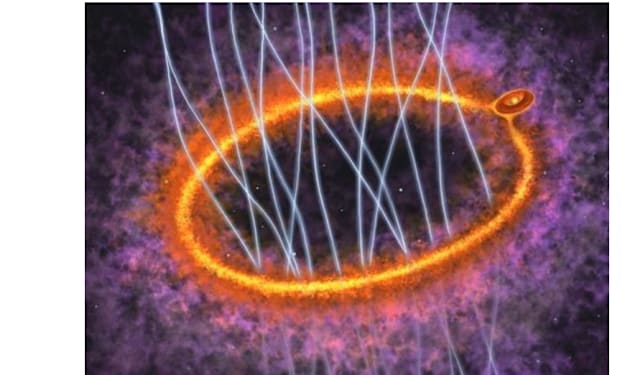
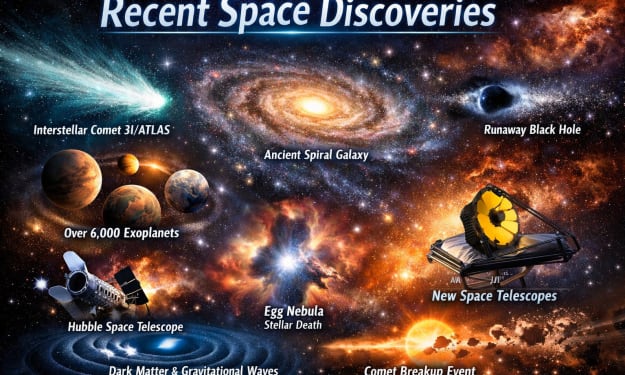
An unidentified space object was observed "screaming" out of our galaxy at a speed of more than one million miles per hour.
Although our Sun appears to be the center of the universe, it is actually moving at a speed of around 500,000 miles per hour as it circles the Milky Way galaxy. That's quick, but it pales in comparison to a star runaway that was just found and is speeding across space.
By Francis Dami30 days ago in Futurism
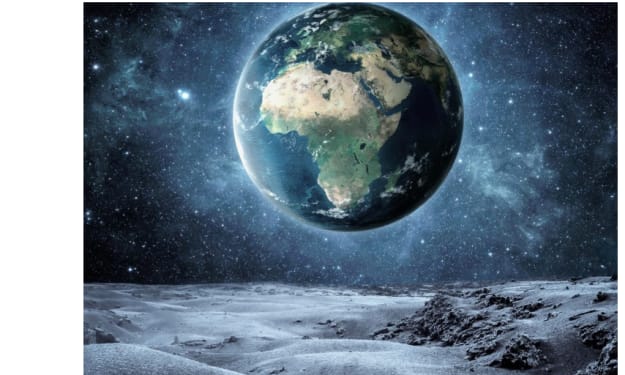
Earth's vast chemical storehouse is being gathered by the Moon.
Despite its seeming permanence, Earth's atmosphere is gradually seeping into space. According to recent studies, part of that wasted air does not vanish. Rather, it wanders away and lands on the Moon, where it slowly builds up over billions of years in the lunar soil. Science and exploration both depend on this process.
By Francis Damiabout a month ago in Futurism
Title: War's Effects on the World Economy: How Wars Change Financial Stability
Title: War's Effects on the World Economy: How Wars Change Financial Stability Introduction One of humankind's most destructive experiences is war. The immediate effects are frequently observed on battlefields, but the effects go far beyond military conflict. Around the world, wars have an impact on economies, cause trade to be disrupted, increase poverty, and cause financial instability.
By Farida Kabirabout a month ago in Futurism
10 Mind-Blowing Space Stories School Never Told You
For many of us (especially if you grew up watching Star Trek), space truly feels like the final frontier. Sure, school taught us about planets, gravity, and maybe a little about rockets. But what we got was just a glimpse of the safe, simplified version.
By Areeba Umair2 months ago in Futurism