
What can human architects and engineers learn from termites?
Smart insects' lessons on building better, energy-saving homes.
Home design and urban planning have been my hobby since the first online apps appeared. Initially, I fooled around with AutoCAD - just to learn the basics - and later developed more serious projects with FloorPlanner, though I never published any.
Although I follow industry updates - especially futuristic ideas - I always knew I'd never be an architect or interior designer. But that hasn't stopped me from admiring ingenious design wherever it appears - even in places most people would never think to look.
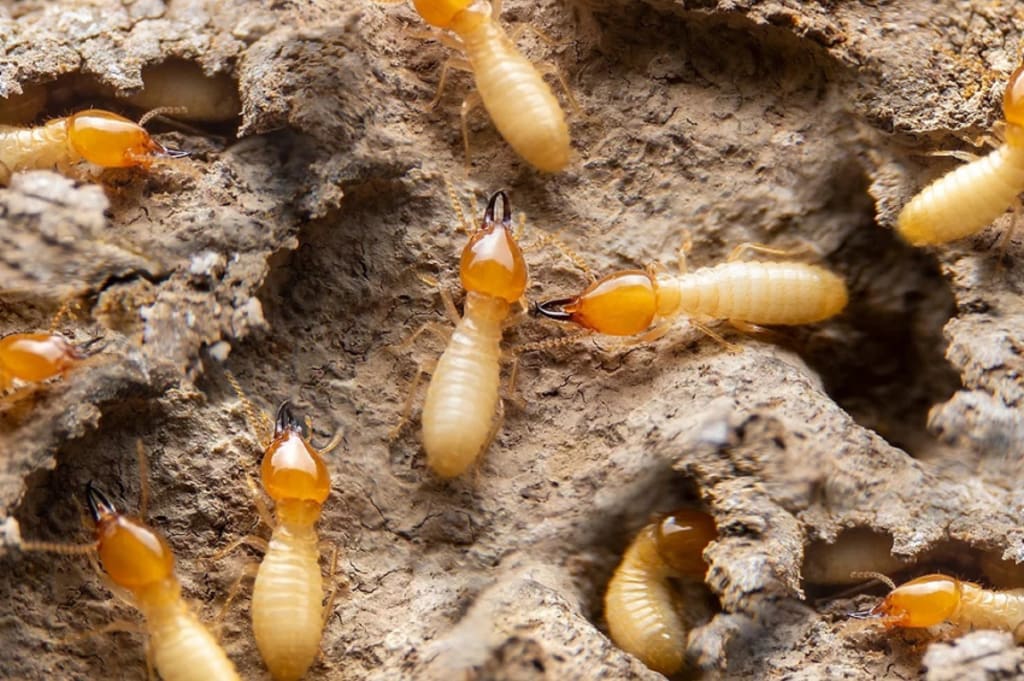
When we think of architects and engineers designing the buildings of the future, termites might not be the first creatures that come to mind. Yet two scientists have revealed that these tiny insects - specifically the termite species Macrotermes michaelseni from Namibia - hold valuable lessons for creating energy-efficient, comfortable interior climates in our homes.
The discovery could revolutionize architecture and help reduce the carbon footprint of air conditioning.
Termites, often dismissed as pests, are actually ecosystem engineers of immense significance. Their colossal mounds, towering up to eight meters high, have evolved over tens of millions of years through natural selection. Among the key features of these mounds is the "egress complex" - an intricate network of interconnected tunnels that plays a pivotal role in maintaining the mound's interior environment.

Researchers Dr. David Andréen and Dr. Rupert Soar studied these structures and discovered that the egress complex could transform how we think about ventilation and temperature control.
Their study, titled "Termite-inspired metamaterials for flow-active building envelopes" (published in Frontiers in Materials), focused on how the tunnel layout enables efficient airflow, heat distribution, and moisture regulation.
Nature's blueprint for comfort
One of the study's most significant findings is how the egress complex facilitates oscillating airflow patterns. Using 3D-printed models and simulations, Andréen and Soar observed that wind oscillations within the tunnels enhance mass transfer of air for ventilation.
These oscillations create turbulence, effectively carrying away respiratory gases and excess moisture. This natural ventilation process maintains a delicate balance of temperature and humidity inside the mound - without blocking fresh air inflow or stale air outflow.
This discovery has major implications for human architecture. Unlike traditional HVAC systems, which often struggle to maintain ideal indoor conditions, the egress complex offers a structured interface for gas exchange driven by differences in concentration.

In essence, it allows buildings to "breathe" naturally, ensuring interior comfort without energy-intensive air conditioning.
Applying termite wisdom
The potential applications are exciting. Andréen and Soar envision a future where buildings are constructed with walls containing networks similar to the egress complex. Emerging technologies like powder bed printers could embed sensors and actuators within these structures, requiring minimal energy for efficient airflow management.
Furthermore, this research highlights the importance of mimicking nature's complexity in construction. As construction-scale 3D printing becomes more sophisticated, architects and engineers can design buildings that replicate intricate natural structures - like the egress complex.
This approach could simultaneously address interior comfort, respiratory gas regulation, and moisture management within the building envelope.
For creatures that don't read design blogs or subscribe to industry updates, they've been building better than us for millions of years. That's a lesson no degree can teach - but anyone with curiosity can learn.
And perhaps most humbling of all? Scientists also esteem termites as excellent fighters and farmers.
About the Creator
Aurel Stratan
Media entrepreneur, communication specialist, business journalist, science & tech blogger. I am interested in history, AI, economics, and astrophysics.
Keep reading
More stories from Aurel Stratan and writers in Chapters and other communities.
The Cave Part 11
Darkness, and the countless points of light, as if the entire void beyond was filled with the fire of a million stars. I felt as if I was staring into the eternity of a night sky beyond those wooden doors, the place beyond the actual reality, while I stood behind a curtain of scenery, the mountain and sky a mere pretense. And in that void beyond of unfathomable space, there hung suspended a mighty shard of crystal floating in place, with hundreds of a far smaller chunks orbiting around it in balanced but intersecting circles, no two in the same path. These caught the light from the center, and sparkled with inner fire each.
By Jamye Sharp5 days ago in Chapters
ThunderCats Fanfiction Project (Ch 6 Episode 5)
As the convoy fractures and the flagship braces for battle, ancient Thunderan bloodlines return to the bridge—silent, primal, and bound to Baron Tass alone. With the children trembling, the warriors arming, and the Sword of Omens still refusing to speak, the royal flagship becomes a crucible where old loyalties and new destinies converge.
By Marcellus Grey5 days ago in Chapters


Comments
There are no comments for this story
Be the first to respond and start the conversation.